Japanese Names Generator
Japanese names are among the most beautiful and meaningful in the world. Each name is carefully chosen using kanji characters that carry deep significance — from nature and seasons to virtues and aspirations. Whether you're naming a character for your anime-inspired story, writing historical fiction set in feudal Japan, or simply exploring Japanese culture, our generator creates authentic-sounding names with proper meaning and structure.
Japanese Naming Conventions
In Japan, names follow the family name + given name order (Tanaka Yuki, not Yuki Tanaka). Family names (myoji) often reference nature: Yamamoto (mountain base), Tanaka (rice field middle), Suzuki (bell tree). Given names are chosen with great care, with parents selecting kanji that carry auspicious meanings.
Female Japanese names traditionally end in soft sounds: -ko (child), -mi (beauty), -ka (flower), -na (greens, vegetables). Modern names have shifted toward shorter, more international-sounding options like Hana, Mei, and Rin. Male names often end in -ro (son), -ta (thick/great), -ki (tree), or -shi (aspiration).
Unlike Western fantasy names where sounds are invented freely, authentic Japanese names must map to real kanji combinations. The name Sakura (桜) literally means cherry blossom. Haruki (春樹) combines spring and tree. This depth of meaning makes Japanese names exceptionally rich for character development in fiction, giving writers layers of symbolism to work with in their stories.
Choosing the Perfect Japanese Name
For anime and manga characters, consider the genre. Shonen protagonists often have strong, punchy names (Naruto, Goku, Ichigo), while shoujo characters tend toward elegant, nature-inspired names (Sakura, Usagi, Hotaru). Historical or samurai characters work well with classical names like Musashi, Nobunaga, or Tomoe.
If you're writing medieval fantasy with Japanese influences, blend historical naming patterns with your world's conventions. Many Korean and Chinese names share structural similarities, allowing you to build a consistent East Asian-inspired naming system across your fantasy world.
For cultural authenticity, pay attention to era-appropriateness. A Heian-period noblewoman would have a very different name than a modern Tokyo teenager. Our generator includes both traditional and modern styles to match whatever period or setting you need for your creative project.
Japanese Names Generator by Variant
Feudal Japan & Samurai-Era Names
Feudal Japan — the age of samurai, daimyo, and shogun — calls for names that ring with history. Historical Japanese names from the Edo, Sengoku, and Heian eras follow older conventions than modern ones: evocative kanji meaning strength, honor, or nature (Takeshi/warrior, Hideaki/excellent-bright), clan surnames tied to land and lineage (Takeda, Oda, Date), and the weight of bushido behind every syllable. For a samurai protagonist, a period drama, a historical novel, or a feudal-era campaign, these names avoid anachronism and root your character in old Japan. Use the Historical filter to generate feudal Japan and samurai-era names.
- Katsuro Nobunaga Victorious son of prolonged trust — invoking the legendary warlord's ambition an
- Tomoe Gozen Named after the legendary female samurai warrior, a symbol of martial excellence
- Fujiwara Mei Sprout of the wisteria field — connecting to one of Japan's most illustrious his
- Oda Musashi Named evoking both the Oda clan and the legendary swordsman Miyamoto Musashi.
- Uesugi Chiyo A thousand generations of the Uesugi clan — suggesting timeless legacy and endur
- Tokugawa Hiroshi Generous one of the Tokugawa lineage — invoking the great shogunate dynasty of E
- Watanabe Takeshi Fierce warrior from the water crossing — strength tempered by fluidity of the wa
- Araki Junichi Obedient second son of the rough wood — humble, steadfast character from samurai
- Ishimaki Tomoe Circle of the stone scroll — honoring the legendary warrior woman of the Heian p
- Goto Isamu Courage of the woven door — a samurai name suggesting martial discipline and val
- Taira Hideo Excellent man of the Taira clan — invoking the grand era of feudal nobility.
- Hattori Hideo Excellent man of the service clan — the Hattori were renowned as skilled craftsp
Female Japanese Names
Female Japanese names blend natural imagery with graceful sound, weaving cherry blossoms, moonlight, and gentle virtues into every syllable. Traditional choices lean on classic endings like -ko (child), -mi (beauty), and -ka (flower), while modern Japanese girl names favor shorter, breezier picks such as Aoi, Yuki, or Mei that read naturally in both Japanese and English. Anime-inspired options add a spark of stylization for original characters and fan fiction without losing that authentic Japanese rhythm. Whether you are naming a protagonist, a background character, or a real-world project, these female names pair believable kanji-rooted meaning with an elegant, memorable sound. Use the Female filter to generate a full set of Japanese girl names instantly.
- Suzuki Sakura Cherry blossom of the bell tree family — one of the most beloved name
- Aoi Mizuki Beautiful moon, blue as the sky — a modern name with an ethereal, dreamy
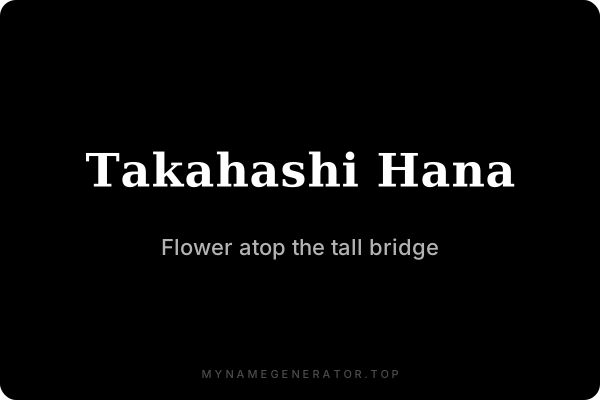
- Takahashi Hana Flower atop the tall bridge — a delicate name with imagery of beauty elevated
- Kimura Asuka Fragrance of tomorrow from the tree village — a name that looks forward with
- Shimizu Hotaru Firefly of the clear water — a poetic name that glows with gentle, fleeting
- Nishimura Midori Green of the western village — a name that evokes lush landscapes and tranquil
- Hinata Ishikawa Sunny place above the stone river — eternally popular modern girl's name.
- Yuna Mori Kindness of the forest — gentle modern girl, soft melodic appeal.
- Akane Nishimura Deep red of the western village — stunning modern color-inspired girl's name.
- Nakano Yukiko Snow child of the central field — winter purity at the heart of simplicity.
- Iwai Emiko Beautiful child of the rock well — combining earth stability with feminine
- Saito Hinata Sunny place from the Saito clan — warm, bright, and increasingly popular for
Male Japanese Names
Male Japanese names carry strength, discipline, and quiet resolve, qualities reflected in kanji meanings like warrior, mountain, and dependable son. Traditional forms often end in -ro, -ta, -ki, or -shi, giving names like Kenji, Takeshi, and Ryuji a grounded, classical weight, while modern picks such as Riku, Sota, and Daichi feel contemporary without losing their Japanese roots. Anime and pop-culture-flavored options bring extra edge for original characters, protagonists, and gaming profiles. From a family-rooted surname-plus-given-name combination to a short, punchy single name, this set covers everything from historical gravitas to modern cool. Use the Male filter to generate a full set of Japanese boy names instantly.
- Tanaka Haruki A name meaning 'spring tree from the rice field center' — poetic and grounded
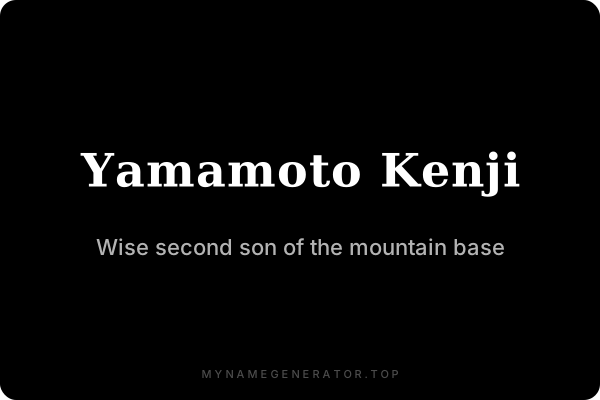
- Yamamoto Kenji Wise second son of the mountain base — a strong, classical name for a
- Kobayashi Riku Land of the small forest — a strong, earthy name grounded in the natural world.
- Daichi Maeda Great earth of the forward rice field — strong modern earth-grounded boy's name.
- Sota Saito Sky-soaring from sunny place — young, modern, full of potential energy.
- Kazuki Mori Harmony wood of the forest — balanced modern boy, trendy name in Kyoto.
- Shin Yamamoto True mountain base — authentic modern boy, genuine character.
- Yamada Soichi First son of the mountain rice field — foundational strength from rural Edo
- Naoki Yamamoto Honest chronicle of mountain — truthful modern boy, reliable character.
- Ichiro Nishimura First son of western village — traditional modern boy, pioneering spirit.
- Minato Shimizu Harbor of clear water — connecting modern boy, bridge-builder energy.
- Kento Takahashi Healthy boy atop the tall bridge — straightforward modern masculine appeal.
Fantasy and Fictional Japanese Names
Fantasy and fictional Japanese names sit between authenticity and imagination, inspired by real naming patterns but freed from strict kanji rules, perfect for anime original characters, light novel protagonists, or Japanese-inspired fantasy worlds. These names often blend classic sounds (Kenshin, Tomoe, Yamato) with punchier, stylized picks (Raiden, Arashi, Kira) that feel at home in a game profile or a manga cast list. Unlike a purely historical name, a fictional Japanese name can take small creative liberties, an invented surname pairing, a nature word repurposed as a given name, while still sounding unmistakably Japanese. Great for original characters, tabletop heroes, and any story that borrows Japanese naming aesthetics without needing full cultural accuracy.
- Himura Kenshin Heart of the sword, scarlet village — the name of a wandering swordsman seeking
- Raiden Tokugawa Thunder spirit of the Tokugawa — anime-inspired modern power name.
- Yamato Tokugawa Great harmony of the Tokugawa — classical modern blend, patriotic anime feel.
- Kira Watanabe Sparkle from the crossing — anime-aesthetic name radiating modern shine.
- Tomoe Watanabe Guardian of the crossing — strong feminine warrior name, modern anime appeal.
- Isamu Ishikawa Valiant courage above stone river — bold anime-modern samurai spirit.
- Shiro Uesugi White warrior of the Uesugi — pure modern boy's name, samurai-anime hybrid.
- Rei Suzuki Spirit of the bell tree — ethereal anime-modern girl's name with mystique.
- Arashi Watanabe Storm from the crossing — powerful anime-inspired modern boy's name.
- Akira Shimizu Bright clarity of clear water — modern unisex name with radiance.
- Taichi Takahashi Great first one atop bridge — leader modern boy, prominent personality.
- Yuki Suzuki Courage bell tree — bold modern girl, anime-inspired determination.
Japanese Clan Names
Japanese clan names identify a lineage rather than a single person, the surname carried by every member of a family, dynasty, or fictional faction. Historically, clans like Takeda, Shimazu, Ikeda, and Hosokawa held territory and political power, and their names still evoke prestige, loyalty, and shared history. For worldbuilding, character rosters, or team names, these surnames work well as the shared family name behind a cast of related characters, a rival house, or a faction tag, useful well beyond a single historical-era story. Pair a clan surname with any given name to build a family tree or a group identity that instantly reads as authentically Japanese, without pinning the setting to one specific era.
- Takeda Yoriko Child who supports the warrior field — invoking the famous Takeda clan of
- Shimazu Nobuhiro Wide-reaching man of the clear field — the Shimazu dominated Satsuma province.
- Ikeda Makiko True child of the pond field — Ikeda clan heritage of the Five Great Daimyō.
- Hosokawa Chiyo A thousand generations of the narrow river — one of the Five Great Daimyō
- Kano Sada Pure one of the talented lineage — Kanō clan artistic heritage and refinement.
- Asano Ayako Elegant child of the shallow field — Asano clan legacy of the Forty-Seven Rōnin.
- Sasaki Shigeo Luxuriant man of the bamboo foundation — resilience and grace from Sasaki clan
- Sakakibara Yoshio Good man of the sake tree field — a daimyō name steeped in Edo nobility.
- Minamoto Sachiko Happy child of the source clan — connecting to the mighty Minamoto warrior
- Kaneda Tomoe Circle woman of the gold field — wealth and completeness from merchant
Japanese School Names
Japanese school names call for a lighter, contemporary sound than a historical or samurai-era name, think classmates, club members, and slice-of-life protagonists rather than warlords. Modern picks like Yui, Sakura, Ryo, and Hana are common choices for a school-set story, easy to say, easy to remember, and instantly readable as teenage or young-adult characters. These names work equally well for a manga script, a light novel, a visual novel, or any story set in a Japanese high school, from homeroom classmates to student council rivals. Combine a modern given name with any surname from the generator to build a believable cast of students in seconds.
- Aiko Nakamura Beloved child of the central village — sweet and contemporary with soft appeal.
- Natsuki Ishikawa Summer moon above the stone river — trendy unisex name with seasonal charm.
- Haru Mori Spring of the forest — gentle, nature-connected modern name for any gender.
- Mina Tanaka Beautiful greens from the rice field — idol-culture vibes, trendy in Tokyo.
- Ryo Suzuki Distant bell tree — short modern masculine name, anime-style cool factor.
- Hana Maeda Flower of the forward rice field — delicate modern girl, classic beauty.
- Koji Maeda Little earth of the forward rice field — humble, grounded modern boy's name.
- Yui Tanaka Graceful reason from the rice field center — a popular modern name with bright
- Emi Nakamura Blessed center village child — fortunate modern girl, positive energy.
- Keisuke Shimizu Respectful help of clear water — polite modern boy, trustworthy vibes.
- Sakura Saito Cherry blossom from sunny place — timeless modern girl's name, always beloved.
- Nana Kobayashi Seven sevens of small forest — playful modern girl's name, gyaru culture vibes.
Popular Japanese Names and Their Meanings
| Name | Meaning | Origin | Gender |
|---|---|---|---|
| Suzuki Sakura | Cherry blossom of the bell tree family | Japanese | Female |
| Tanaka Haruki | Spring tree from the rice field center | Japanese | Male |
| Watanabe Yuki | Snow from the crossing, quiet elegance | Japanese | Neutral |
| Nakamura Akira | Bright one of the central village | Japanese | Neutral |
| Tomoe Gozen | Legendary female samurai warrior | Japanese | Female |
| Yamamoto Kenji | Wise second son of the mountain base | Japanese | Male |
| Takahashi Hana | Flower atop the tall bridge | Japanese | Female |
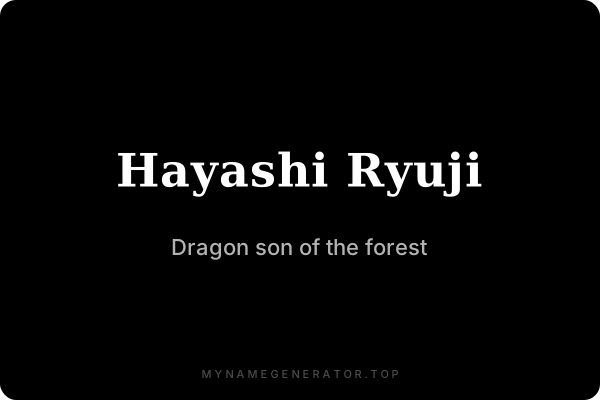
| Hayashi Ryuji | Dragon son of the forest | Japanese | Male |
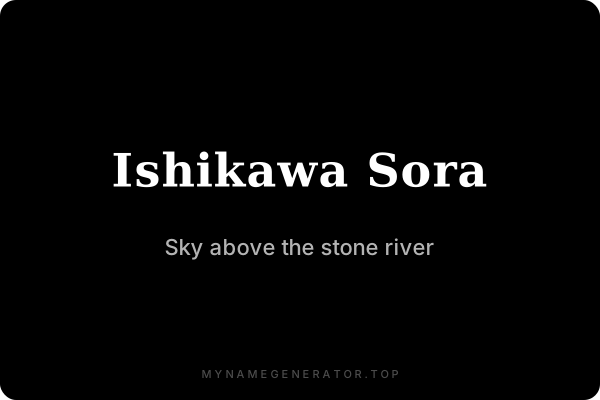
| Ishikawa Sora | Sky above the stone river | Japanese | Neutral |
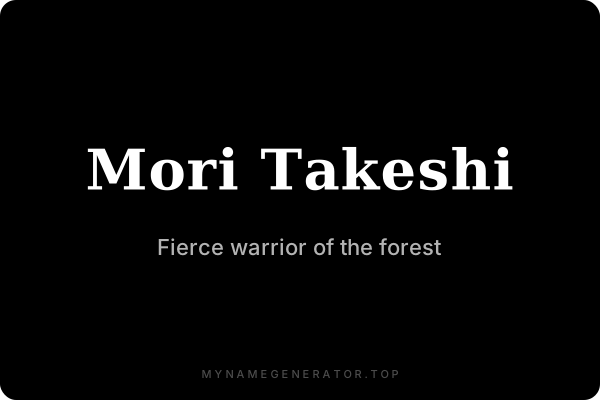
| Mori Takeshi | Fierce warrior of the forest | Japanese | Male |
| Nishimura Midori | Green of the western village | Japanese | Female |
| Katsuro Nobunaga | Victorious son of prolonged trust | Japanese | Male |
Featured Name Cards
Frequently Asked Questions
How are Japanese names structured?
Japanese names follow family name + given name order. Family names come first (e.g., Tanaka Haruki, where Tanaka is the surname). In Western contexts, the order is often reversed. Given names are written in kanji, each character carrying specific meaning.
What are popular Japanese names for anime characters?
Popular anime-style names include Sakura, Naruto, Hinata, Ichigo, Rei, Asuka, and Yuki. These names are memorable, easy to pronounce, and carry symbolic meanings that often reflect the character's personality or role in the story.
Can I use Japanese names for non-Japanese characters?
In fantasy and fiction, names can be used freely for worldbuilding. However, if writing a story set in the real world, consider whether it's culturally appropriate for your specific context. For fantasy worlds with Japanese-inspired cultures, these names are perfect.
What do Japanese name suffixes mean?
Common suffixes include -ko (child, traditionally feminine), -mi (beauty), -ro (son), -ta (great), -maru (circle, used for boys), and -hime (princess). These suffixes help indicate gender and can add layers of meaning.
Are these names authentic Japanese names?
Our generator includes both real Japanese names with accurate kanji meanings and Japanese-inspired fantasy names. Each name is tagged so you can filter for traditional, modern, anime-style, or historical names depending on your needs.