Hydra Name Generator
Our hydra name generator draws on the fearsome legend of the Lernaean Hydra — the nine-headed serpent of Greek myth slain by Heracles — to produce names worthy of any multi-headed beast. Whether you need lernaean hydra names for ancient lore or fantasy hydra names for your campaign, filter by element and type to find the perfect fit.
Hydra Naming Conventions
Hydra names sit at a crossroads between the thundering weight of Greek mythological naming and the darker compound style favored in modern fantasy. Classical names lean on hard stops and guttural vowels — echoing the creature's violence and regeneration — while contemporary fantasy hydra names tend to layer elemental or descriptive roots to signal the beast's nature before it strikes.
The Greek tradition supplies prefixes drawn from water, serpent, and death imagery: hydros (water), drakon (serpent), thanatos (death). These roots produce names that feel immediately ancient and threatening. A Royal hydra might carry a name with regal suffixes like -ion or -ax, while a Wild variant favors jagged, open-ended sounds that feel untamed.
Compared to cerberus names — which skew toward underworld and chthonic resonance — or basilisk names built on regal petrification lore, hydra names uniquely blend aquatic weight with reptilian menace. Kraken names share the deep-water register, but hydra names add the regenerative violence that defines the creature. Those hunting for wyvern names will notice a similar hunger for menace, though wyvern naming favors sharper, winged-flight sounds over aquatic weight. When building multi-headed serpent names, consider pairing a classical Greek root with an elemental suffix to ground the name in myth while signaling its elemental affiliation.
Finding the Right Hydra Name
In tabletop RPGs like D&D or Pathfinder, a hydra functions best as a boss encounter — a swamp guardian, a river deity gone feral, or an ancient horror lurking beneath a corrupted lake. The name you choose signals the encounter's tone immediately. A Water hydra with a name rooted in Greek myth sets a classical, epic mood; a Shadow hydra with a jagged compound name promises something more visceral and modern.
For aquatic or marsh-based encounters, fantasy hydra names that blend elemental and serpentine roots help players understand the threat at a glance. Mounted combat scenarios — a party fighting from boats or riding sea creatures — call for names with momentum and weight, something that sounds like it belongs on an ancient map. Writers crafting fiction can draw on lernaean hydra names to anchor their creature in recognizable myth before diverging into original lore. Pair a strong hydra name with a title — "the Undying," "of the Marsh Throne" — to give even a nameless beast a sense of history. Parties who also want female siren names for a mermaid or siren NPC will find the same aquatic, mythic register carries over into hydra naming.
Popular Hydra Names and Their Meanings
| Name | Meaning | Origin | Gender |
|---|---|---|---|
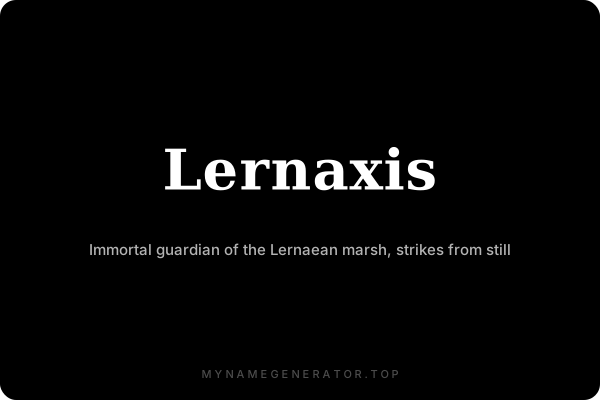
| Lernaxis | Immortal guardian of the Lernaean marsh, strikes from still water | Greek Myth | Neutral |
| Pyrathon | Fire-blooded serpent whose breath ignites reed beds | Ancient Lore | Neutral |
| Venekaroth | Poison sovereign whose venom outlives the age it was brewed | Modern Fantasy | Neutral |
| Skotodrak | Shadow-drinker that eclipses the sun with its spread hoods | Modern Fantasy | Neutral |
| Thundravex | Storm-caller whose roar arrives before the lightning | Ancient Lore | Neutral |
| Hydralios | Royal water-born, claims dominion over all river deltas | Greek Myth | Male |
| Echidnara | Ancient mother-kin, older than the heroes who hunt her | Greek Myth | Female |
| Morvaxis | Wild and headless-reborn, terror of the western fens | Modern Fantasy | Neutral |
| Pontherion | Deep-sea predator draped in brine and old salt | Ancient Lore | Neutral |
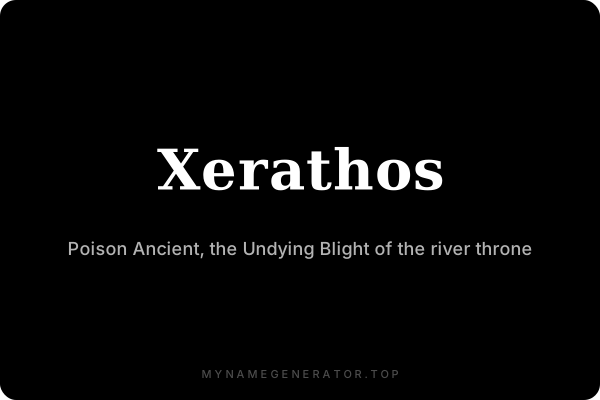
| Xerathos | Poison Ancient, the Undying Blight of the river throne | Greek Myth | Neutral |
| Ignivrak | Fire Wild-born, scorches the marsh before entering it | Modern Fantasy | Neutral |
| Stygodren | Shadow Royal risen from the boundary of the underworld river | Ancient Lore | Neutral |
Featured Name Cards
Frequently Asked Questions
What are hydra names?
Hydra names are names crafted for the multi-headed serpent of Greek mythology and its counterparts in modern fantasy. They typically draw on Greek roots related to water, serpents, and regeneration, blending ancient mythological resonance with the elemental and dark qualities that define the creature across different settings.
What makes a good fantasy hydra name?
A strong fantasy hydra name combines a sense of ancient weight with elemental threat. Look for hard consonants, guttural vowels, and roots drawn from Greek or archaic lore. Adding an elemental qualifier — fire, poison, shadow — helps signal the hydra's nature while keeping the name rooted in myth.
Can I use hydra names for D&D campaigns?
Absolutely. Hydra names work well as boss creature identifiers in D&D, especially for swamp, river, or coastal encounters. Pairing a generated name with a descriptive title such as the Undying or of the Marsh Throne gives your encounter instant depth and memorable flavor for players.
What is the difference between a hydra and a basilisk or cerberus?
All three are classic creatures of Greek myth, but they carry distinct naming registers. Cerberus names lean heavily on underworld and chthonic imagery. Basilisk names reflect regal, petrifying menace with a more serpentine stillness. Hydra names are uniquely tied to water, regeneration, and overwhelming physical threat — the multi-headed serpent quality means names often feel plural in weight even when grammatically singular.
What are some lernaean hydra names from Greek mythology?
The Lernaean Hydra itself is the most famous example, named after the Lernean marshes in ancient Greece. Classical sources do not assign individual names to hydra heads, but the creature's lineage — daughter of Typhon and Echidna — provides a rich naming tradition. Modern retellings have expanded this with names drawing on Greek roots for water, serpent, death, and immortality.