Names That Mean Void Name Generator
Names that mean void reach back to the first cosmological myths — the primordial emptiness before creation. From Greek Khaos to Hebrew Tehom, cultures across history have named the abyss. This generator surfaces real names rooted in void, nothingness, and the cosmic dark, ideal for characters in dark fantasy and philosophical fiction.
The Etymology of Void Names Across Mythologies
Names that mean void draw on some of the oldest cosmological concepts in human mythology. In Greek tradition, Khaos names the formless void that preceded all creation — not chaos in the modern sense, but a vast, empty gulf. The Hebrew Tehom, the deep abyss of primordial waters in Genesis, gave rise to names evoking bottomless darkness. Norse mythology contributes Ginnungagap, the yawning void between fire and ice from which the first worlds emerged.
Eastern traditions offer equally rich sources. Hindu philosophy names this emptiness Shunya, a concept central to Buddhist thought as well — the absence that underlies all phenomena. Japanese naming draws on Mu (nothingness) and Ku (emptiness), both Zen concepts describing the void as a state of spiritual clarity rather than absence. Egyptian cosmology adds Nu, the primordial watery abyss from which Ra and the gods of creation emerged. What unites these traditions is the idea that the void is not an absence of meaning, but its origin point.
Void Names in Fiction, Sci-Fi, and Cosmic Horror
Names meaning void have become a staple of science fiction, cosmic horror, and dark fantasy. In Lovecraftian fiction, the void is the natural habitat of entities beyond human comprehension — beings that predate creation and will outlast it. A character named Khaos or Tehom carries that same weight of primordial dread without a word of explanation. Lovecraftian games and fiction regularly borrow from real mythological void-names to ground their cosmology in something that feels ancient and earned.
Video games like Mass Effect made the void a narrative presence through the Reapers — entities that emerge from dark space to consume civilizations. Anime and manga frequently feature void users, characters whose powers draw on emptiness and nothingness as a force. Philosophically minded authors naming demon characters, necromancer antagonists, or morally ambiguous anti-heroes often reach for void etymology precisely because names that mean death or names that mean evil feel too literal — void suggests something older and more abstract, a presence that predates good and evil entirely.
Popular Names That Mean Void Names and Their Meanings
| Name | Meaning | Origin | Gender |
|---|---|---|---|
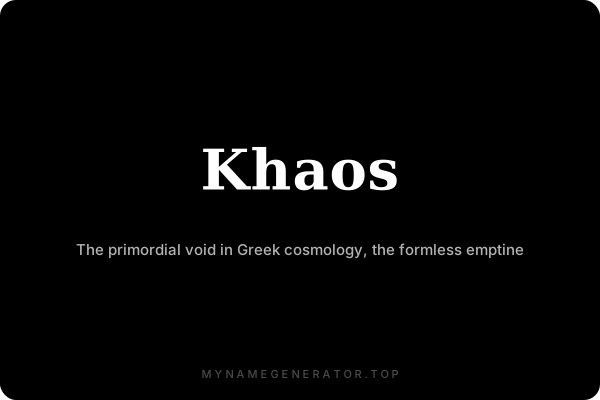
| Khaos | The primordial void in Greek cosmology, the formless emptiness before creation existed | Greek | Neutral |
| Tehom | The deep abyss of primordial waters in Hebrew cosmology, darkness before the first light | Hebrew | Female |
| Nyx | Goddess of night born from Khaos, mother of sleep and death in Greek mythology | Greek | Female |
| Shunya | Emptiness and zero in Sanskrit, the philosophical void underlying all phenomena in Hindu thought | Hindi | Neutral |
| Nu | The primordial watery abyss of Egyptian cosmology, the void from which Ra and creation emerged | Arabic | Male |
| Erebus | The deep darkness and void at the edge of the underworld in Greek mythology | Greek | Male |
| Mu | Nothingness in Japanese Zen philosophy, the void as a state beyond presence and absence | Japanese | Neutral |
| Abyssara | Derived from the Latin abyssus and Greek abyssos, the bottomless void without foundation | Latin | Female |
| Vacua | From the Latin vacuus meaning empty or void, the absence of all matter and form | Latin | Female |
| Inanis | Latin for empty, hollow, and void — used in Roman philosophy to describe formless nothingness | Latin | Neutral |
| Kaenon | Derived from the Greek kenon, meaning the empty or the void in ancient atomist philosophy | Greek | Male |
| Shunyata | The Buddhist concept of emptiness and voidness, the fundamental nature of all phenomena | Hindi | Female |
Featured Name Cards
Frequently Asked Questions
What are names that mean void?
Names that mean void are names whose etymologies trace back to concepts of emptiness, nothingness, or the primordial abyss across world mythologies. These include Greek names like Khaos and Erebus, Hebrew Tehom, Sanskrit Shunya, Japanese Mu, and Egyptian Nu — all rooted in cosmological ideas about the void that preceded or underlies creation.
What mythology has the most void names?
Greek mythology is one of the richest sources of void names, with Khaos, Erebus, Nyx, and related primordial deities all connected to pre-creation emptiness. Hindu and Buddhist traditions are equally deep, with Shunya and Shunyata naming the void as a central philosophical concept rather than simply a place of darkness.
Are void names good for dark fantasy or sci-fi characters?
Yes. Names rooted in void etymology work exceptionally well for cosmic horror, dark fantasy, and science fiction characters. They carry a sense of primordial age that names meaning death or names meaning evil do not — the void predates both concepts. They suit demon lords, ancient entities, necromancer antagonists, and any character whose power draws on emptiness or nothingness.
What is the difference between void names and abyss names?
Void names typically refer to formless pre-creation emptiness — concepts like Khaos, Shunya, and Mu. Abyss names more often refer to a deep, dark place — a bottomless pit rather than nothingness. In practice the two overlap significantly, with names like Tehom and Erebus carrying both meanings. Both categories share roots in cosmological mythology across Greek, Hebrew, Norse, and Eastern traditions.
Can I use void names for philosophical or literary characters?
Absolutely. Names meaning void carry strong philosophical weight — concepts like Mu, Shunya, and Shunyata come directly from Zen and Buddhist philosophy. A character named Vacua or Inanis signals intellectual depth rooted in Latin philosophical tradition. These names suit morally ambiguous characters, lovecraftian figures, and any protagonist grappling with questions of existence and nothingness.