Necromancer Names Generator
Necromancers wield the darkest of all magical arts — raising the dead, binding souls, and bending the line between life and death. Our necromancer name generator offers over 200 names steeped in shadow, decay, and forbidden knowledge. Whether you're building a D&D villain, writing a dark fantasy novel, or crafting a horror RPG character, you'll find names that chill to the bone. Where demon names radiate raw infernal power, necromancer names carry the cold, calculated dread of someone who has mastered death itself.
Necromancer Naming Conventions
Necromancer names draw from Latin, Greek, and Gothic roots tied to death, darkness, and the grave. Prefixes like Nec-, Grav-, Dirg-, Mal-, and Ereb- immediately signal the character's dark nature. Names such as Necrogulis, Gravzeneth, or Erebmoris layer these death-roots with harsh consonants and resonant endings that feel like an incantation.
Unlike wizard names which often sound scholarly and arcane, dark necromancer names feel visceral and threatening. Where a wizard's name might evoke a dusty library, a necromancer's name evokes a crypt. The naming formula typically combines a death-root with a power suffix: -oris (authority), -ivus (essence), -arion (mastery), or -eth (binding). Female necromancer names often soften slightly with -is, -eth, or -orim endings while maintaining their menace.
Dnd necromancer names benefit from matching the character's specialization. A Bone Caller might be named Gravzeneth, while a Wraithlord could carry a name like Malvethorim. The most memorable evil necromancer names pair a sinister given name with a descriptive title — the Plaguebringer, the Soul Reaper, the Deathweaver — creating a name that doubles as a reputation.
Finding the Perfect Necromancer Name
When choosing a necromancer name, consider what drives your character. Is your necromancer a power-hungry lich adept seeking immortality, a mourning prophet who speaks with the dead out of grief, or a calculating ebon priest who views death as a tool? Each motivation calls for a different tone. Erebbarazar sounds ancient and unknowable — echoing the lovecraftian tradition of cosmic horror that shares occultism and forbidden arts with necromancy — while Thancareth feels sharp and dangerous.
For tabletop campaigns, necromancer names work brilliantly for both player characters and villains. A healer and a necromancer make fascinating foils — one restores life while the other perverts it. Consider how your name sounds when spoken by terrified NPCs: "Zoltarivus approaches" carries far more weight than a generic title. Pair the name with a dark-elf ally or a witch patron for rich storytelling. For a female antagonist archetype, browse villainess names alongside this generator's Female filter to build a necromancer queen as feared as she is elegant.
Writers and game developers should explore the full range of necromancer archetypes beyond the classic skeleton-raiser. A Cemetery Oracle who reads futures in grave soil, a Corpse Sculptor who builds grotesque constructs, or a Shadowbinder who commands darkness itself — even names that mean void suit such an archetype perfectly. Each subtype offers unique naming possibilities that deepen your worldbuilding and avoid cliches.
Popular Necromancer Names and Their Meanings
| Name | Meaning | Origin | Gender |
|---|---|---|---|
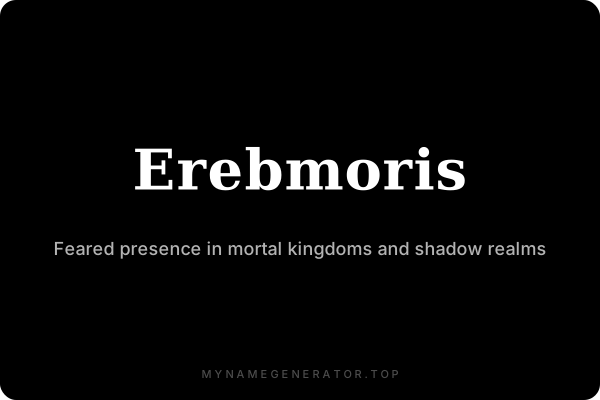
| Erebmoris | Feared presence in mortal kingdoms and shadow realms | Gothic | Neutral |
| Zoltarivus | Turns battlefields into charnel grounds | Dark Latin | Male |
| Malsothor | Eyes glow with ghostly fire and unholy sorcery | Gothic | Female |
| Thancareth | Commands shadows whispering secrets of the grave | Dark Latin | Male |
| Malvethorim | Wanders graveyards seeking lost souls to enslave | Gothic | Female |
| Necrogulis | Feeds on sorrow, weaving spells from grief | Dark Latin | Male |
| Ravgornivus | Turns battlefields into grounds of horror | Gothic | Neutral |
| Dirgdralis | Cloak stitched from funeral shrouds | Gothic | Neutral |
| Erebzirazar | Summoner of banshees, herald of death | Dark Latin | Male |
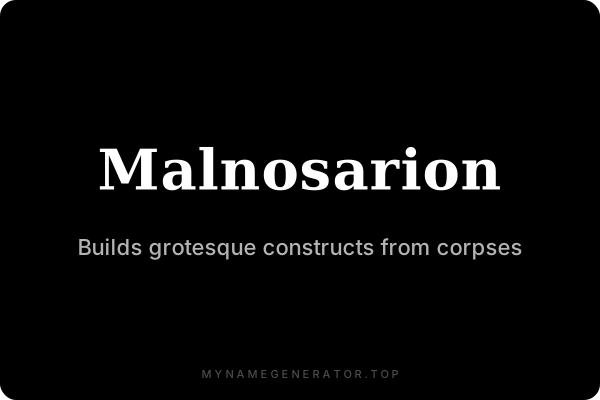
| Malnosarion | Builds grotesque constructs from corpses | Gothic | Neutral |
| Erebbarazar | Seeks the secret of lichdom at any price | Dark Latin | Neutral |
| Gravzeneth | Believed immortal, sustained by draining life | Gothic | Male |
Featured Name Cards
Frequently Asked Questions
What are necromancer names?
Necromancer names are names inspired by practitioners of death magic in fantasy fiction. They draw from Latin, Greek, and Gothic roots connected to death, darkness, and the grave. These names typically feature harsh consonants and ominous syllables that evoke forbidden power and dread.
What is a good necromancer name for D&D?
Great dnd necromancer names match your character's specialization. For a School of Necromancy wizard, try Erebmoris or Zoltarivus. For an Oathbreaker paladin with necromantic flavor, Thancareth or Gravzeneth work well. Pair the name with a dark title for maximum impact at the table.
Can I use these names for villains in my story?
Absolutely. Evil necromancer names like Malvethorim, Necrogulis, or Erebzirazar are designed to sound menacing and memorable. They work perfectly as villain names for novels, video games, D&D campaigns, and any dark fantasy setting where death magic plays a central role.
What is the difference between necromancer names and demon names?
Demon names radiate raw infernal power with guttural, primal sounds, while dark necromancer names carry a more calculated, scholarly menace. Necromancers are mortal practitioners who study death — their names reflect learning and ambition. Demons are inherently supernatural — their names reflect chaos and destruction.
How do I choose the right necromancer name?
Start with your necromancer's archetype: lich adept, soul reaper, gravebinder, or plaguebringer. Then match the name's tone to their personality — ancient and unknowable, sharp and aggressive, or cold and calculating. Use the type filter to browse names by specialization, and consider pairing a given name with a title for added depth.