Lamia Name Generator
Use this lamia name generator to create powerful serpent woman names rooted in Greek myth, ancient Egyptian lore, and modern fantasy settings. The lamia is one of mythology's most haunting figures — a snake-bodied seductress cursed to prey upon the living. Whether you're building a D&D encounter, writing dark fantasy fiction, or crafting a complex villain, these lamia names capture the creature's dangerous allure.
Lamia Naming Conventions
Lamia names draw from three distinct traditions, each shaping the sounds and meanings behind these serpent woman names in different ways. In Greek mythology, the original Lamia was a Libyan queen transformed by Zeus's curse — and names from this tradition carry regal, tragic weight. They favor long vowel sequences, aspirated consonants, and suffixes ending in -ia, -eia, or -onis that signal divine or semi-divine lineage. Think of names that feel both beautiful and doomed.
Egyptian and Levantine variants produce a different register of lamia names. Drawing on ancient Kemetic and Semitic naming pools, these names often include harder consonants, guttural stops, and root words tied to serpents, death, or the underworld. Figures like Apep — the chaos serpent — lend a mythological gravity to names in this tradition, making them ideal for more monstrous or primordial lamia characters. Writers layering extra dread onto a lamia villain often pair her with nephilim names for added Biblical weight.
Modern fantasy, including D&D's lamia lore, blends both heritages freely while adding invented syllables for pure aesthetic effect. Unlike siren names — which lean toward aquatic musicality — or succubus names — which favor demonic darkness — lamia names occupy a hybrid space: seductive yet feral, cultured yet predatory. Female succubus names sit at the demonic end of that spectrum, trading the serpent's hiss for sulfur and shadow. The best examples combine a smooth opening syllable with a sharper, hissing ending, echoing the creature's dual nature as serpent and woman.
Choosing the Right Lamia Name
The role your lamia plays should guide your name choice. A Seductress lamia operating in a court of mortals benefits from a name that sounds noble and almost human — something a victim might trust before it's too late. A Sorcerer lamia who commands ancient magic calls for a name heavy with mythological resonance, drawn from Greek or Egyptian roots. A Hunter lamia needs a name with bite — shorter, sharper, built for a creature that strikes without warning. A Ruler lamia, commanding lesser serpent-kin, deserves a name that carries authority across every syllable.
For D&D campaigns, lamia names work especially well for powerful recurring villains, cult leaders in desert or jungle settings, or seductive NPCs who are not what they seem. Pair a strong lamia name with a title to sharpen the effect — a Ruler might be styled as a Queen of the Shedding Scales, while a Sorcerer carries an epithet tied to her forbidden knowledge. Fantasy fiction writers can lean into the femme fatale archetype or subvert it entirely, giving a Hunter lamia a name so soft it reads as ironic. Either way, the right name does half the worldbuilding for you.
Popular Lamia Names and Their Meanings
| Name | Meaning | Origin | Gender |
|---|---|---|---|
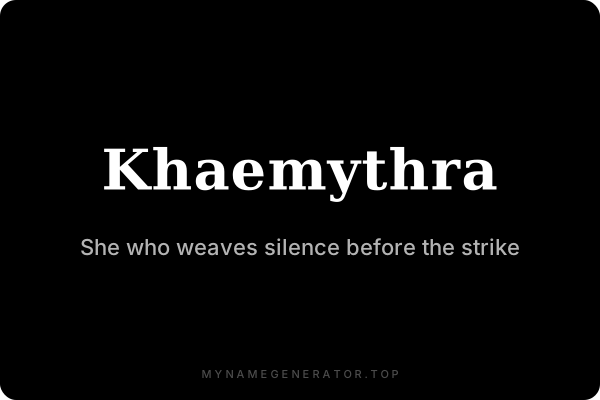
| Khaemythra | She who weaves silence before the strike | Egyptian | Female |
| Selaphira | Moonlit scales, draws wanderers from the road | Greek | Female |
| Nassaret | Keeper of the serpent's ancient covenant | Egyptian | Female |
| Lyxoveia | Her gaze unravels the will of kings | Greek | Female |
| Venorath | Commands the nest with cold authority | Modern Fantasy | Female |
| Aphoreis | Traces the boundary between death and desire | Greek | Female |
| Sesthari | Desert sorceress who speaks in forked truths | Egyptian | Female |
| Myrathis | Enchants her prey with whispered prophecy | Modern Fantasy | Female |
| Kheprana | Born in the coil of the underworld river | Egyptian | Female |
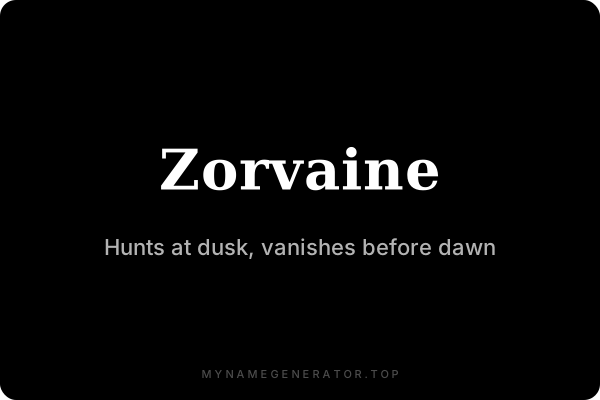
| Zorvaine | Hunts at dusk, vanishes before dawn | Modern Fantasy | Female |
| Threnaia | Her beauty is a lament for those who fall | Greek | Female |
| Syxareth | Rules the borderlands between beast and court | Modern Fantasy | Neutral |
Featured Name Cards
Frequently Asked Questions
What is a lamia in mythology?
In Greek mythology, Lamia was a Libyan queen and lover of Zeus who was cursed by Hera to devour her own children, driving her to madness and transforming her into a child-devouring monster. Over time the myth evolved, and lamia became a category of serpent-bodied seductress figures in folklore — beautiful from the waist up, snake below — who lured and consumed unsuspecting men.
What makes a good lamia name?
A strong lamia name balances seductive elegance with an underlying sense of danger. Greek-rooted names work well for tragic, noble lamia characters, while Egyptian or Levantine roots suit more monstrous, primordial versions. Modern fantasy lamia names often blend both influences, using smooth opening syllables and sharper, sibilant endings that evoke the serpent's hiss.
How are lamia names used in D&D?
In D&D, lamias are desert-dwelling monster villains with illusion magic and the ability to curse targets with a touch. Lamia names in this context work best for recurring antagonists, cult leaders, or seductive manipulators pulling strings behind a campaign's scenes. Pairing a name with a title — Ruler, Sorcerer, or Seductress — helps define the lamia's role in your story.
What is the difference between a lamia and a siren or succubus?
All three are mythological seductresses, but each belongs to a distinct tradition. A siren originates in Greek sea mythology and lures with her voice. A succubus is a demonic figure from Abrahamic traditions who drains life through temptation. The lamia is rooted in Greek and Near Eastern myth as a serpent-bodied woman who hunts physically, often in remote or desert settings. Their naming conventions differ too — siren names are melodic and aquatic, succubus names lean demonic, while lamia names carry a dry, ancient, and venomous quality.
Can lamia names work for other snake or seductress characters?
Absolutely. These names translate naturally to nagas, yuan-ti, medusas, or any serpentine fantasy creature. They also work well for dark enchantresses, femme fatale villains, or any character in a role where beauty and danger coexist. The Egyptian variants in particular suit desert-themed settings, while Greek names feel at home in Mediterranean or classical fantasy worlds.