Ifrit Name Generator
This ifrit name generator draws on Arabic mythology to forge names for one of the most fearsome classes of jinn — beings of smokeless fire, bound to neither heaven nor earth. Whether you need a cunning vizier, a flame-wreathed warlord, or a lamp-bound trickster, these ifrit names carry the heat of the desert and the weight of ancient legend.
Ifrit Naming Conventions
Ifrit naming traditions reach back to pre-Islamic Arabia, where these fire-spirits occupied a distinct tier among the jinn — more powerful and more wrathful than common djinn, yet still bound by cosmic law. Authentic Arabic ifrit names tend to favor hard consonants (kh, gh, q, z), short emphatic vowels, and roots tied to concepts of fire, darkness, or dominion: names like Iblis, Zifar, or Qahtan carry this weight naturally. When building arabic ifrit names, look to Arabic triconsonantal roots — a single root can generate an entire family of related names with different roles and registers.
Persian poetic tradition adds a second layer. Ifrits appear in Persian epics and One Thousand and One Nights alongside div (demons) and peri (fairies similar to the fairy and nymph archetypes in other traditions). Persian-influenced names tend to be longer, more melodic, and often end in -ān or -in suffixes: Azarīn, Kaivān, Nūshīn. These names suit vizier or sage roles where cunning and eloquence matter more than raw power.
Modern fantasy has produced a third category — flame-compound names built from evocative elements: Ashvorn, Embrakhal, Cindrazul. These fire genie names blend the harsh phonetics of Arabic with fantasy invention and work well for warlord or trickster archetypes. Like the imp and the sylph in lighter traditions, they signal immediate archetype without requiring mythological knowledge from your audience.
Bringing Your Ifrit to Life
Ifrits thrive in settings where power and obligation collide. In D&D and Pathfinder's genie lore, ifrits (or efreet) rule the City of Brass on the Elemental Plane of Fire — a place of grandiose politics, slave markets, and infernal bargains. An ifrit vizier NPC needs a name that sounds both regal and dangerous: something like Qazareth or Sulakhar. A warlord besieging a mortal city deserves the blunt force of a name like Zhamrok or Ignareth.
For Arabian Nights-inspired campaigns and fiction, lean into the lamp-bound trickster angle. An ifrit sealed into a vessel for centuries will have a name from a forgotten era — archaic, slightly alien to modern ears, yet instantly pronounceable. Think Barhazat, Umraqat, or Khusravan. These names reward players who ask about etymology, opening doors to worldbuilding about the character's past.
Writers blending ifrit mythology with darker fantasy can draw on the overlap between ifrits and figures like the demon or the succubus — beings of raw elemental will rather than infernal corruption. An ifrit antagonist who believes they are simply reclaiming what was owed to them is more compelling than a generic villain, and a name rooted in Arabic concepts of justice or vengeance (Ghayzan, Intiqam) reinforces that moral ambiguity immediately.
Popular Ifrit Names and Their Meanings
| Name | Meaning | Origin | Gender |
|---|---|---|---|
| Zulqahran | Master of twin flames, ancient fire sovereign | Arabic | Male |
| Nasriyah | She who rises on pillars of smoke | Arabic | Female |
| Azarīn | Born of the eternal flame, keeper of ember secrets | Persian | Female |
| Barhazat | Sealed spirit of volcanic wrath, unbound by no treaty | Arabic | Male |
| Kharvazan | Lava-tongue vizier, advisor to the brass throne | Persian | Male |
| Umraqat | Smoke-veiled trickster who speaks only riddles | Arabic | Female |
| Ashvorn | Ash-born wanderer carrying the grief of a dead forge-city | Modern Fantasy | Neutral |
| Ghayzan | Fury tempered into cold calculation, vizier of reprisal | Arabic | Male |
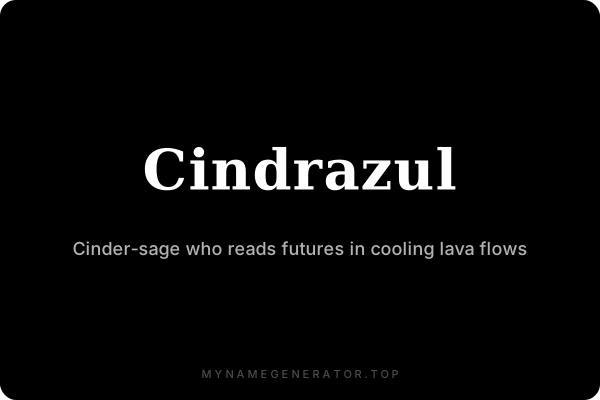
| Cindrazul | Cinder-sage who reads futures in cooling lava flows | Modern Fantasy | Neutral |
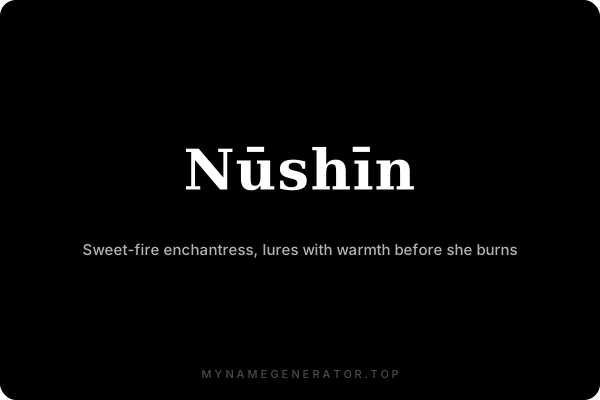
| Nūshīn | Sweet-fire enchantress, lures with warmth before she burns | Persian | Female |
| Sulakhar | Warlord who turns sand to glass beneath marching armies | Modern Fantasy | Male |
| Intiqam | Vengeance made manifest, bound to a lamp for seven centuries | Arabic | Female |
Featured Name Cards
Frequently Asked Questions
What is an ifrit in Arabic mythology?
In Arabic and Islamic tradition, an ifrit is one of the most powerful classes of jinn — spirits created from smokeless fire. Unlike common djinn, ifrits are associated with vengeance, immense physical strength, and a fierce, often malevolent will. They appear in the Quran and extensively in One Thousand and One Nights as antagonists, bound spirits, and reluctant servants.
What makes a good ifrit name?
Authentic ifrit names draw on Arabic triconsonantal roots and favor hard consonants like kh, gh, q, and z. Look for roots tied to fire, dominion, wrath, or darkness. Persian-influenced names add melodic length with suffixes like -ān or -in, suited to vizier or sage roles. For fantasy settings, flame-compound names like Ashvorn or Cindrazul work well for warlords and tricksters.
Can ifrits be female?
Yes. Arabic tradition includes both male and female jinn of all classes, and ifrits are no exception. Female ifrits appear in classic Arabian Nights tales and are no less powerful than their male counterparts. Names with Arabic feminine markers (-ah, -iyah endings) or Persian feminine suffixes (-in, -ān) work naturally for female ifrit characters.
What is the difference between an ifrit and a djinn — or a demon?
Djinn (jinn) is the broad category; an ifrit is a specific and particularly powerful subcategory within it, distinct from lesser spirits like marid or si'la. Ifrits are not demons in the Western sense — they are elemental beings of fire bound by their own cosmic laws, capable of good or evil. The key distinction is origin: ifrits emerge from smokeless fire, while demons in most traditions are fallen or corrupted beings. The overlap in modern fantasy is common but not theologically accurate.
Can I use these ifrit names for D&D or Pathfinder?
Absolutely. In D&D lore, efreet (the plural form used in the game) rule the Elemental Plane of Fire and appear as powerful genie-type creatures. Pathfinder similarly features ifrits as a playable ancestry. These names work equally well for player characters, genie patron NPCs, City of Brass nobles, or any fire-themed elemental encounter.