Werewolf Name Generator
Whether you're building a wolf pack for a horror novel, crafting a lycanthrope character for a tabletop campaign, or naming a cursed shapeshifter for your game, our werewolf name generator delivers names that carry both beast and human weight. From ancient alpha bloodlines to lone wolves haunting the moonlit wilderness, every name here is built to leave a mark.
Werewolf Naming Conventions
Werewolf names sit at the crossroads of two natures — human and beast — and the best lycanthrope names honor both sides of that tension. The human half often draws from Germanic, Norse, or Slavic roots: cultures historically intertwined with wolf mythology, where wolves were feared as pack hunters and revered as symbols of the wild. Names like Aldric, Grimsvar, or Wulfric carry that old-world weight without sounding artificially archaic.
The beast half introduces a different register. Alpha names tend toward power and dominance — short, punishing syllables that land like a warning. Pack names lean communal, with shared roots or sound patterns that mark belonging. Cursed werewolf names often carry a fractured quality, as though a human name has been warped by the transformation: something once clean that now sounds feral at the edges.
Werewolf last names follow a parallel logic. Clan surnames built on wolf imagery — Ironpaw, Ashfang, Greymantle — signal pack identity at a glance. Inherited human surnames corrupted by centuries of the curse work differently, grounding the lycanthrope in a bloodline and suggesting the curse runs deep through the family. For lone wolf characters, invented surnames that describe terrain or behavior — Duskhollow, Thornmoor — replace the pack name with a personal mark.
Gender shapes werewolf names in interesting ways. Male names often favor harder consonants and closed syllables that evoke physical force. Female werewolf names balance that ferocity with fluidity — names that sound dangerous but not blunt. Unisex names in the wolf pack tradition tend toward nature and elemental imagery, belonging to the pack rather than to any single identity.
Choosing the Right Werewolf Name for Your Story
The strongest werewolf name generator results match the lycanthrope's relationship with the curse. An ancient werewolf — centuries old, its human self nearly erased — suits a name that sounds worn and mythological, something that belongs in old languages and older fears. A newly cursed character, still fighting the transformation, works better with a name that feels almost-human: recognizable enough that readers feel the loss as the beast takes over.
Pack dynamics matter enormously for naming. An alpha needs a name that commands silence when spoken. A beta name can carry loyalty and tension in equal measure — close to the alpha's register but not quite there. For wolf pack names shared across a group, consider a naming convention that links them: a shared root, a recurring sound, a title that marks hierarchy. It builds world texture without a single line of exposition.
For horror and dark fantasy, werewolf names share stylistic territory with villain and demon naming — raw, elemental, built for dread. As one of fiction's most enduring monsters, the werewolf demands a name that carries both human grief and bestial power. For RPG campaigns, especially those exploring lycanthrope lore, a well-chosen name doubles as backstory. A werewolf called Varek the Ashborne tells you he survived something. One named Sableclaw suggests a hunter who embraced the curse entirely. Pair your werewolf name with a title, a pack, or a territory, and it becomes legend. Names from the ghost and siren traditions can also cross-pollinate here, particularly for cursed or lone wolf types straddling the line between supernatural categories.
Popular Werewolf Names and Their Meanings
| Name | Meaning | Origin | Gender |
|---|---|---|---|
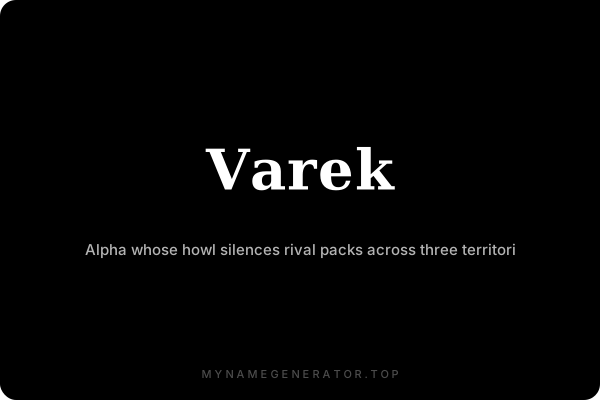
| Varek | Alpha whose howl silences rival packs across three territories | Slavic | Male |
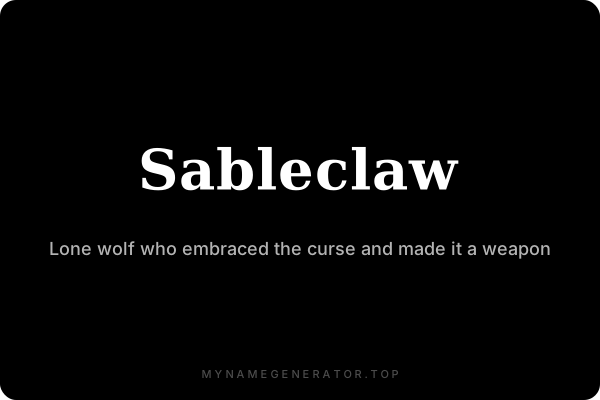
| Sableclaw | Lone wolf who embraced the curse and made it a weapon | Shadow | Male |
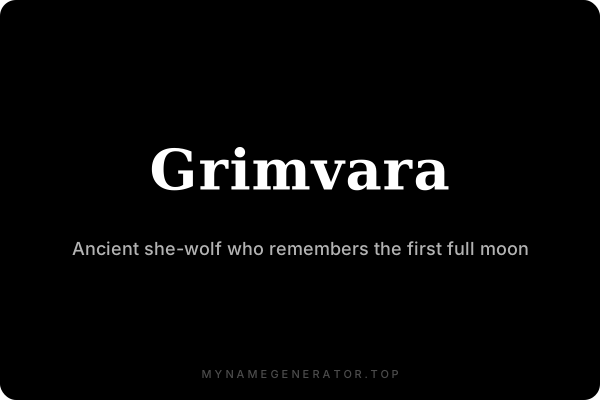
| Grimvara | Ancient she-wolf who remembers the first full moon | Norse | Female |
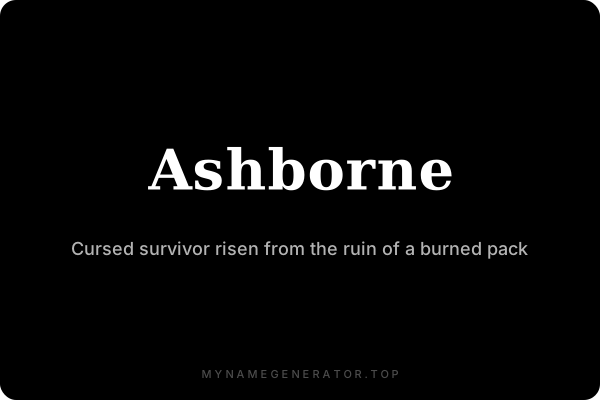
| Ashborne | Cursed survivor risen from the ruin of a burned pack | Spectral | Unisex |
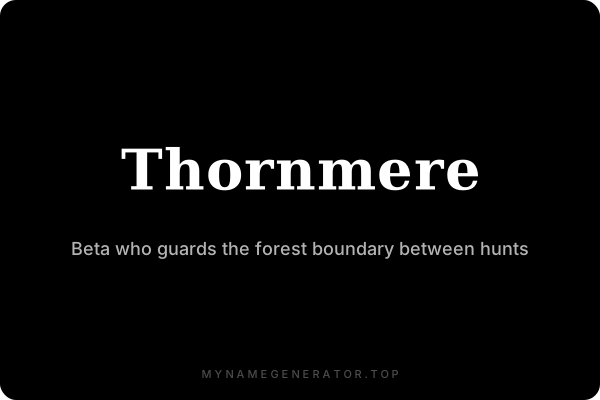
| Thornmere | Beta who guards the forest boundary between hunts | Old English | Female |
| Wulfric | Pack elder carrying the weight of a century of turns | Germanic | Male |
| Duskfang | Lone wolf who hunts only in the hour between sunset and dark | Shadow | Male |
| Seravyn | Cursed lycanthrope who still weeps in human form each dawn | Archaic | Female |
| Ironpelt | Alpha resistant to silver — a mutation feared by hunters | Pack | Male |
| Morrwen | Ancient she-wolf whose bloodline traces back to the original curse | Celtic | Female |
| Greymantle | Pack enforcer who carries the alpha's judgment into the wilds | Old English | Unisex |
| Caldrex | Beta who lost his pack and runs alone under every moon | Archaic | Male |
Featured Name Cards
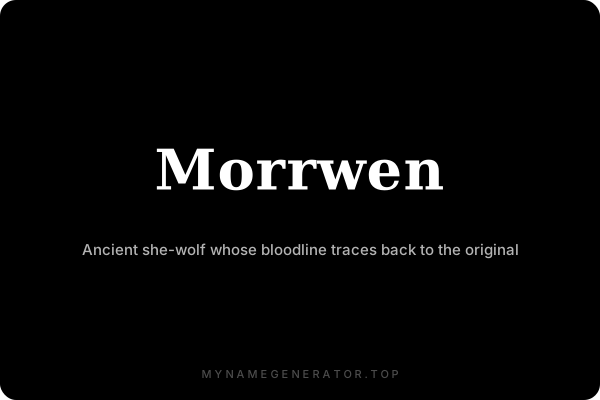
Frequently Asked Questions
What is a werewolf name generator?
A werewolf name generator creates names for lycanthropes — shapeshifters cursed to transform under the full moon. It's designed for horror and dark fantasy writers, tabletop RPG players, game developers, and anyone building a story or world that features wolf-human hybrids. Names can reflect pack rank, curse origin, gender, and character history.
What makes a good werewolf name?
The best werewolf names balance the human and beast sides of the lycanthrope. For alpha characters, short and dominant names with hard consonants work well. Cursed werewolf names often sound fractured or corrupted. Lone wolf names tend toward terrain and isolation imagery. Werewolf last names built on wolf pack conventions — Ironpaw, Ashfang, Greymantle — immediately signal identity and rank.
What are good wolf pack names for a group of werewolves?
Wolf pack names work best when they share a convention across the group — a common root word, a recurring sound, or a linked title. A pack might be known by its territory (the Thornmoor Pack), its alpha's name (the Varek Bloodline), or a shared curse marker. Individual lycanthrope names within the pack can mirror the alpha's register, reinforcing hierarchy through sound.
Can I use werewolf names for D&D or other tabletop RPGs?
Absolutely. Werewolf names are well-suited to D&D lycanthropes, Pathfinder shapeshifters, World of Darkness campaigns, and any horror-adjacent tabletop system. An alpha werewolf NPC with a memorable name becomes a recurring threat. A player character with a carefully chosen lycanthrope name has built-in backstory before the campaign begins.
What is the difference between an alpha and a lone wolf name?
Alpha werewolf names carry authority and weight — they sound like commands. Names like Varek, Ironpelt, or Grimvara suggest dominance and pack leadership. Lone wolf names reflect isolation and self-reliance: Duskfang, Sableclaw, Thornmere. They often draw from landscape and shadow imagery rather than pack hierarchy. Cursed names occupy a middle ground — they carry pain and history regardless of rank.