Golem Name Generator
This golem name generator draws on Hebrew folklore, medieval legend, and classic fantasy to produce names for animated constructs of every material — from the clay golem of Prague to stone guardians and iron war machines. Whether you need a name for a D&D encounter or a creature in your novel, find one that carries the weight of ancient magic — and for another legendary giant, browse yeti names too.
Golem Naming Conventions
Golem names fall into three distinct traditions. The oldest and most evocative comes from Hebrew and Yiddish folklore: short, resonant names — Emet, Yossel, Adamah — rooted in the same language used to inscribe the word of life on a golem's forehead. These names carry spiritual gravity and feel immediately ancient, making them ideal for clay golems and servant constructs tied to a single creator.
The second tradition is the descriptive English compound, where the golem's material and function merge into the name itself: Ironwall, Ashenvault, Stonewarden. This approach dominates modern fantasy tabletop encounters — a stone golem names itself through what it is made of, and players recognise its nature before combat begins. Gargoyle and wyvern characters often share this naming logic, reinforcing their elemental identity.
The third tradition uses single mystic words of Latin or invented origin — Colossum, Vaelthar, Obdurix — evoking the alchemical workshop and the arcane ritual that breathed life into dead matter. These names suit iron golem war-engines and crystal sentinels, where power matters more than origin. Fantasy golem names in this register feel authoritative and slightly inhuman, signaling that the construct operates beyond simple obedience.
Choosing a Name for Your Golem
Start with the golem's material and purpose. A clay servant built to protect a household calls for a short Hebrew-rooted name — something a creator would murmur when activating it. A stone golem guardian stationed at a fortress gate earns a heavier, compound name that conveys permanence. An iron golem war-construct bred for battle suits a harsh Latin coinage with no softness in its syllables.
In D&D and Pathfinder, golems are constructs immune to many magical effects, which shapes how players and dungeon masters narrate them. A name like Vaelthar or Cinerex signals an encounter with a thinking weapon, not a mindless obstacle. Players who enjoy warforged characters will recognise the same design impulse — a name that embodies the construct's material and purpose rather than a living being's identity. For necromancer and wizard characters who build their own constructs, naming the golem is itself a creative act — consider pairing a personal name with a material suffix: Yossel-of-Iron, Emet-Cinder.
Writers working golems into fiction can lean on the Prague legend for emotional resonance: a flesh golem named with care by a creator who feared for their community carries more pathos than a nameless automaton. Golems neighbour other legendary guardians — cerberus, gargoyle, kraken — but unlike those creatures born from nature, the golem is made, and its name should feel crafted too. For contrast, yeti names belong to creatures born wild — no maker, no inscription, no ritual.
Popular Golem Names and Their Meanings
| Name | Meaning | Origin | Gender |
|---|---|---|---|
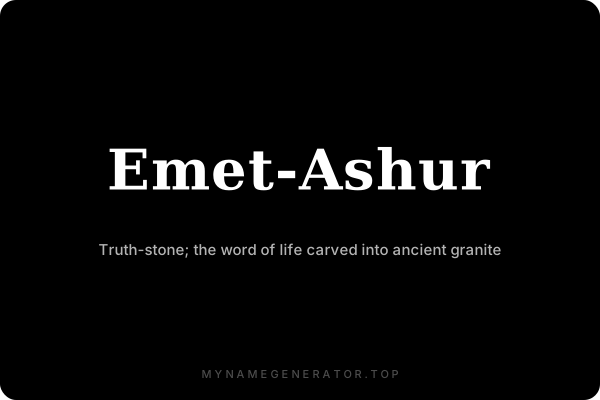
| Emet-Ashur | Truth-stone; the word of life carved into ancient granite | Hebrew Folklore | Neutral |
| Yosselkar | Guardian named by the rabbi who shaped it from Prague clay | Hebrew Folklore | Male |
| Ironwarden | Iron sentinel forged to hold a gate until the world ends | Modern Fantasy | Neutral |
| Cinerex | Ash-born war construct, tempered in a volcano's core | Latin | Male |
| Vaelthar | Crystal golem whose facets reflect the soul of its maker | Modern Fantasy | Neutral |
| Adamah | From the earth itself; the first clay servant given breath | Hebrew Folklore | Female |
| Stoneshield | Stone guardian raised to protect a city that no longer exists | Modern Fantasy | Male |
| Colossum | Flesh construct of immense scale, animated by forbidden alchemy | Latin | Male |
| Halvex | Iron war-engine built by a dwarf artificer for a siege that never came | Modern Fantasy | Neutral |
| Shirah | Song-servant; a crystal golem that chimes when danger approaches | Hebrew Folklore | Female |
| Gravenhold | Stone sentinel whose body has become part of the keep it guards | Modern Fantasy | Neutral |
| Ferrovex | Iron war construct whose purpose outlasted the war it was built for | Latin | Male |
Featured Name Cards
Frequently Asked Questions
What are golem names?
Golem names are names given to animated constructs in Hebrew folklore, medieval legend, and fantasy fiction. They range from short Hebrew words like Emet or Adamah — drawn from the tradition of inscribing life into clay — to descriptive compounds like Ironwarden and mystic Latin coinages used for war-golems and crystal sentinels.
What are the best golem names for D&D?
For D&D, the best golem names match the construct's material and role. Stone golem names like Gravenhold or Stoneshield signal durability and defense. Iron golem names like Halvex or Ferrovex suggest a war-engine. Clay golem names rooted in Hebrew folklore — Yosselkar, Adamah — add worldbuilding depth to any encounter or artificer backstory.
Can golem names work for female or neutral characters?
Yes. While many traditional golem narratives use male-coded names, golems are constructed beings with no inherent gender. Names like Adamah and Shirah carry a feminine resonance from Hebrew roots, while Emet-Ashur, Vaelthar, and Gravenhold work equally well as neutral names for a construct whose creator never assigned a gender.
How are golems different from other fantasy constructs?
Unlike creatures born from nature — a kraken from the deep, a gargoyle carved by time, a pegasus from divine will — golems are made objects animated by ritual or inscription. This origin shapes their names: a golem's name is often given by its creator rather than inherited, and the best golem names carry that weight of intentional crafting, whether stone, iron, clay, flesh, or crystal.
How do I create my own golem name?
Combine the golem's material with its purpose, or start from a short Hebrew root and add a material suffix. For stone golem names, use hard consonants and compound words (Ashenvault, Stonewarden). For iron golem names, borrow from Latin (Ferrovex, Cinerex). For a fantasy golem name with folklore depth, use Hebrew words meaning truth, earth, or guardian and adapt them to your setting's phonology.