High Elf Names Generator
High elves are the noblest and most ancient of all elven kindreds — immortal scholars, graceful warriors, and powerful mages who dwell in shining cities of starlight and song. Our high elf name generator offers over 200 names radiating elegance, wisdom, and timeless beauty. Whether you're creating a D&D Eladrin, an Elder Scrolls Altmer, or a Tolkien-inspired elf lord, these names carry millennia of refinement. Where dark-elf names whisper of shadow and betrayal, high elf names shine with the clarity of starfire and the weight of ancient legacy, from the heart of every high elf city to the grandest elven city, whose names echo across millennia.
High Elf Naming Conventions
High elf names are built on flowing vowels, liquid consonants, and multi-syllabic structures that sound like an ancient language spoken by immortals. Elven names such as Valwynindra, Melrieleth, and Aendrelaenor layer syllables in cascading patterns — typically three to five syllables with soft transitions between each. Common roots include Ael- (star), Ith- (moon), Vor- (ancient), and Alar- (light), creating a phonetic palette that feels both alien and beautiful.
Unlike fairy names which lean toward whimsical, playful sounds, fantasy elf names for high elves carry a formal, almost ceremonial quality. Dnd high elf names often incorporate titles woven into the name itself — a High Elf Lord named Aewynar or a High Elf Sage named Alarlonen communicates rank through sound alone. Female high elf names tend toward -eth, -indra, and -orin endings, while male names favor -ar, -ion, and -aenor suffixes.
The naming reflects high elven society: structured, hierarchical, and deeply connected to magic. A wizard's name might sound scholarly, but a high elf mage's name sounds like it was carved in starlight. Each syllable carries meaning — lineage, magical affinity, noble house — making high elf names among the richest and most layered in all of fantasy naming, rivaled only by vedalken naming traditions in their scholarly precision and melodic complexity.
Finding the Perfect High Elf Name
Choosing a high elf name starts with your character's role in elven society. A High Elf Prince carries a name of grandeur and destiny like Vorvielanar, while a High Elf Scholar might bear something more contemplative like Aendrelaenor. Consider whether your elf embraces their heritage or has broken from tradition — a wandering exile named Aethear hits differently than a court diplomat named Alarriion.
For tabletop RPGs, high elf names pair beautifully with titles and epithets. "Melrieleth, Keeper of the Eternal Grove" or "Vortheaaris, Knight of the High Court" instantly establishes centuries of backstory. If your medieval campaign features both human and elven kingdoms, the contrast between simple human names and elaborate high elf names reinforces the cultural divide.
Writers should consider how high elf names function in dialogue. Names with clear stress patterns and natural breaking points — Ael-WYNAR, Alar-LON-en — read smoothly on the page. The best high elf names sound like they belong to beings who have lived for thousands of years: ancient, musical, and carrying the quiet confidence of immortality. A rogue with a clipped, sharp name beside a high elf with a flowing, majestic name creates instant character contrast.
High Elf Names Generator by Variant
High Elf Names for Skyrim & The Elder Scrolls
High elves in The Elder Scrolls are called Altmer — the "Cultured Folk" of Summerset Isle. Their names follow strict Aldmeri linguistic conventions: melodic, often built on the root -anor (meaning sun), -mer (folk), or -iel (light). Canon high elf names from Skyrim and the broader series include Ondolemar, Ancano, Nelacar, Estormo, Aranea Ienith. For Skyrim character creation or Elder Scrolls-inspired roleplay, lean into the haughty aristocratic tone — these are names spoken by a people who consider themselves the height of civilization.
- Valwynindra They carry the weight of prophecy carved in starfire runes
- Oriwyneth A warrior-poet, balancing sword and song with elegance
- Melrieleth They carry the weight of prophecy carved in starfire runes
- Ithsiraorin Silent watcher of borders, guarding lands unseen by mortals
- Aewynar A healer, whose touch restores both body and spirit
- Alarlonen Keeper of the Eternal Grove, where spirits dwell in harmony
- Vorvielanar A healer, whose touch restores both body and spirit
- Vortheaaris Knight of the High Court, sworn to honor and eternal vigil
- Alarriion Keeper of the Eternal Grove, where spirits dwell in harmony
- Aewynen A seer whose visions change the fates of entire kingdoms
High Elf Names for D&D
D&D high elves (sometimes called sun elves or moon elves in 5th edition) carry a different naming tradition than Tolkien-influenced or Skyrim Altmer. The Forgotten Realms canon favors names ending in -iel, -andros, -ion, -aera — Erevan, Drannor, Lythari, Alustriel, Storm Silverhand. Pair the first name with a family name describing house origin (Silverhand, Moonglow, Starsong) for instant character backstory. High elf characters work for wizards, sorcerers, eldritch knights, and arcane tricksters across every tier of play.
- Valwynindra They carry the weight of prophecy carved in starfire runes
- Oriwyneth A warrior-poet, balancing sword and song with elegance
- Melrieleth They carry the weight of prophecy carved in starfire runes
- Ithsiraorin Silent watcher of borders, guarding lands unseen by mortals
- Aewynar A healer, whose touch restores both body and spirit
- Alarlonen Keeper of the Eternal Grove, where spirits dwell in harmony
- Vorvielanar A healer, whose touch restores both body and spirit
- Vortheaaris Knight of the High Court, sworn to honor and eternal vigil
- Alarriion Keeper of the Eternal Grove, where spirits dwell in harmony
- Aewynen A seer whose visions change the fates of entire kingdoms
Popular High Elf Names and Their Meanings
| Name | Meaning | Origin | Gender |
|---|---|---|---|
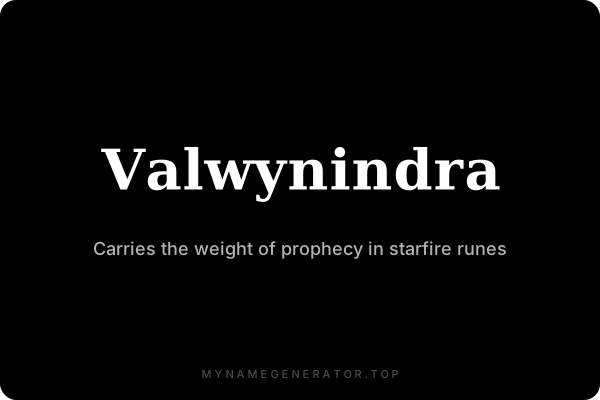
| Valwynindra | Carries the weight of prophecy in starfire runes | High Elven | Female |
| Aewynar | Healer whose touch restores body and spirit | High Elven | Male |
| Melrieleth | Bearer of prophecy carved in starfire runes | High Elven | Neutral |
| Oriwyneth | Warrior-poet balancing sword and song | High Elven | Female |
| Vorvielanar | Prince-healer who restores body and spirit | High Elven | Male |
| Alarlonen | Keeper of the Eternal Grove where spirits dwell | High Elven | Female |
| Vortheaaris | Knight of the High Court, sworn to eternal vigil | High Elven | Neutral |
| Alarriion | Keeper of the Eternal Grove in harmony | High Elven | Neutral |
| Aendrelaenor | Once a warrior, now a sage guiding generations | High Elven | Neutral |
| Aethear | Prince who forsook thrones for the wanderer's path | High Elven | Neutral |
| Ithsiraorin | Silent watcher guarding lands unseen by mortals | High Elven | Female |
| Aenlonaenor | Blade forged in moonfire, whispered of in songs | High Elven | Male |
Featured Name Cards
Frequently Asked Questions
What are high elf names?
High elf names are names used by the noblest elven race in fantasy fiction. They feature flowing multi-syllabic structures, liquid consonants, and vowel-rich patterns that sound ancient and majestic. Common in D&D (Eladrin), Elder Scrolls (Altmer), and Tolkien-inspired settings, these elven names carry centuries of meaning.
What is a good high elf name for D&D?
Great dnd high elf names match your character's class and background. For a wizard, try Melrieleth or Aendrelaenor. For a noble, Vorvielanar or Aewynar carry the right grandeur. Pair the name with an epithet tied to your character's house or magical specialty for rich roleplay.
Can I use these names for Elder Scrolls or other games?
Absolutely. These fantasy elf names work for Altmer in Elder Scrolls, Asur in Warhammer, or any high elven race. The flowing, multi-syllabic style matches the noble, magical archetype across all fantasy settings. Use the type filter to match names to specific roles.
What is the difference between high elf names and dark elf names?
High elf names shine with light and majesty — flowing vowels, soft consonants, and musical cadence. Dark elf names carry shadow and menace — harsh consonants, sibilant sounds, and exotic syllable combinations. The naming contrast mirrors the cultural divide between these two elven kindreds in most fantasy settings.
How do I choose the right high elf name?
Start with your character's role: mage, lord, knight, sage, or seer. Then consider the name's length and complexity — a court noble might carry a long, elaborate name, while a wanderer might use a shorter form. Female high elf names favor -eth and -indra endings, male names lean toward -ar and -aenor. Let the name reflect your character's age, rank, and magical affinity.