Basque Name Generator
The Basque people of northern Spain and southwestern France speak Euskara, a language isolate with no known relatives anywhere in the world — entirely distinct from spanish names and every other European tongue. This basque name generator draws on that extraordinary linguistic heritage, offering authentic first names and surnames rooted in Euskal Herria's landscapes, Marian sanctuaries, and centuries of pastoral tradition. Whether you are tracing Basque ancestry, building a character for fiction, or simply drawn to these resonant sounds, every name here is real and culturally grounded.
Basque Naming Conventions
Basque first names — called izen euskaldunak, or Basque names — fall into three broad layers. The oldest stratum is purely native Euskara: nature words turned into given names such as Haritz (oak), Ibai (river), Ekaitz (storm), Haizea (wind), or Amets (dream). These names carry the landscape of the Basque Country directly into personal identity, something with no equivalent in neighboring Romance traditions. Much like taiwanese names, which blend Hokkien, Hakka, and Indigenous Austronesian roots, Basque given names resist any tidy classification within their surrounding linguistic landscape. A second layer comprises Basque adaptations of Christian saints' names — Mikel for Michael, Kepa for Peter, Miren for Mary, Iker derived from "visitation" in the Gospel. A third layer consists of Marian place names: sanctuaries and pilgrimage villages whose names became female given names, such as Itziar, Ainhoa, Uxue, Idoia, and Begoña.
Basque surnames are among the most distinctive in Europe. Almost all are topographic, describing the location of an ancestor's farmhouse — the etxe or baserri — rather than a trade or a father's first name. The element etxe (house) appears constantly: Etxeberria means "new house," Goikoetxea means "upper house," Bengoetxea means "house of the valley below." Other common roots include mendi (mountain), ibar (valley), harri (rock), eliza (church), and zubi (bridge). Suffixes such as -aga, -eta, -ondo, and -alde signal location or collective meaning, giving Basque surnames a grammatical depth that reflects Euskara's unique structure.
Unlike Spanish naming, which uses a double-surname system passed patrilineally and matrilineally, Basque surnames historically identified the farmstead rather than the bloodline. Moving to a new homestead could mean adopting its surname entirely. This house-name tradition is one of the most archaic naming systems in Western Europe and gives Basque surnames their highly localized, landscape-anchored character.
Choosing a Basque Name for Fiction or Heritage
For fiction writers and worldbuilders, Basque names offer a palette unlike any other European tradition. Because Euskara is a language isolate, Basque names sound neither Romance nor Germanic — they feel ancient and grounded, with consonant clusters and vowel sequences that are immediately recognizable once you know them. A character named Ekaitz (storm) or Urtzi (sky deity) carries mythic weight without straying into fantasy cliché. Names like Amaia (the high place) or Haritz (oak, symbol of Basque liberty) bring thematic resonance that enriches a story without explanation. Fantasy writers seeking a similarly grounded, non-Anglo texture often pair Basque names with fantasy japanese names for a richly multicultural cast of characters.
For historical fiction set in the medieval names tradition of the Iberian Peninsula, Basque names provide a powerful contrast to Castilian and Moorish conventions. A Basque lord in a 12th-century narrative might be Eneko or Beñat, names that were genuinely in use among medieval Basque lords and clergy. Surnames like Loiola — the farmstead of Saint Ignatius — or Elizondo — beside the church — anchor characters in a specific geography that readers can almost visualize.
For heritage research, this generator surfaces names that diaspora communities in Nevada, Idaho, Argentina, and Uruguay carried across generations. If your family tree includes a Garmendia, an Ibarra, or an Etxeberria, these names connect directly to a farmstead in Gipuzkoa, Bizkaia, or Navarre. Basque surnames are unusually stable geographically, and many can be traced to a specific valley or village today.
Popular Basque Names and Their Meanings
| Name | Meaning | Origin | Gender |
|---|---|---|---|
| Amaia | The end or the high place | First Name | Female |
| Aitor | Legendary founder of the Basque people | First Name | Male |
| Miren | Distinctly Basque form of Mary | First Name | Female |
| Iker | Visitation, from the Gospel story | First Name | Male |
| Itziar | Marian sanctuary in Gipuzkoa, cherished Basque name | First Name | Female |
| Iñaki | Basque form of Ignatius, Loyola connection | First Name | Male |
| Maite | Beloved or dear one | First Name | Female |
| Haritz | Oak tree, symbol of Basque liberty | First Name | Male |
| Haizea | Wind, evoking Atlantic coastal breezes | First Name | Female |
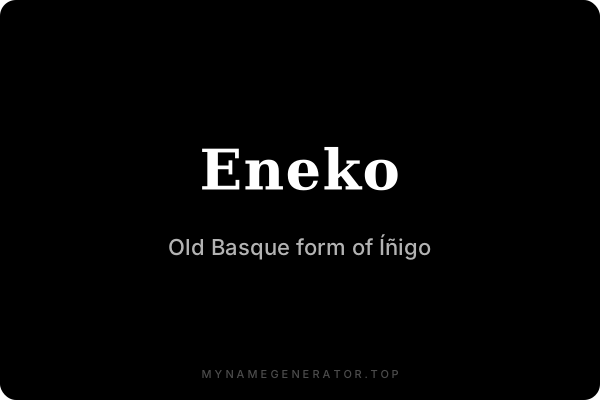
| Eneko | Old Basque form of Íñigo | First Name | Male |
| Edurne | Snow, Basque equivalent of Nieves | First Name | Female |
| Ekaitz | Storm, evoking the Atlantic coastline | First Name | Male |
| Etxeberria | New house, from etxe and berria | Surname | Unisex |
| Ibarra | Valley or river meadow | Surname | Unisex |
| Elizondo | Next to the church | Surname | Unisex |
| Lizarraga | Ash tree grove | Surname | Unisex |
| Loiola | Basque farmstead of Saint Ignatius of Loyola | Surname | Unisex |
Featured Name Cards
Frequently Asked Questions
What is a basque name generator?
A basque name generator creates authentic names from the Basque Country (Euskal Herria), spanning both first names and the distinctive topographic surnames of the region. Each name comes with its meaning and cultural context, drawn from Euskara — the ancient language isolate spoken across northern Spain and southwestern France.
Are these real Basque names?
Yes, every name in this generator is a genuine Basque name documented in historical, literary, or contemporary use. First names include native Euskara words, Basque adaptations of Christian saints' names, and Marian sanctuary names. Surnames are real topographic family names recorded across the provinces of Gipuzkoa, Bizkaia, Álava, and Navarre.
How do Basque surnames work?
Basque surnames traditionally identified the farmstead (etxe or baserri) where a family lived rather than a father's name or a trade. They are almost all topographic descriptions — Etxeberria means 'new house,' Elizondo means 'next to the church,' Ibarra means 'valley.' Common elements include etxe (house), mendi (mountain), harri (rock), and zubi (bridge), combined with suffixes like -aga or -eta to indicate a place.
Can Basque names be used for fiction and RPG characters?
Absolutely. Because Euskara is a language isolate, Basque names sound unlike any Romance or Germanic name, giving fictional characters an immediately distinctive identity. Names like Ekaitz (storm), Urtzi (sky deity), or Amaia (the high place) carry mythic resonance. Basque surnames anchor characters in a specific geography and feel authentic for historical fiction, fantasy, and tabletop RPG settings.
What makes Basque names different from Spanish names?
Basque names come from Euskara, a language with no genetic relationship to Spanish or any other known language. While Spanish names draw from Latin, Arabic, Germanic, and Greek roots, Basque first names often come from nature words (Ibai for river, Lorea for flower) or Marian pilgrimage sites unique to the region. The surname systems also differ fundamentally — Basque surnames describe ancestral farmsteads rather than following the Spanish double-surname inheritance pattern.