Kuo-toa Name Generator
This kuo-toa name generator helps you craft authentic names for the Underdark's most unsettling fish-folk. Kuo-toa are paranoid, mad cultists lurking in subterranean waterways, devoted to strange aquatic gods like Blibdoolpoolp. Their names reflect that wet, burbling nature — glottal stops, double letters, and apostrophes that evoke dripping caverns and fevered prayer.
Kuo-toa Naming Conventions
Kuo-toa names are built from wet, guttural phonemes that imitate the sounds of their damp Underdark environment: glottal stops rendered as apostrophes, doubled consonants like kk, pp, and ll, and short vowel clusters that produce a burbling, bubbling rhythm. A typical kuo-toa name runs two to three syllables and often ends in a hard stop — Bloop, Ploopploopeen, Uk'kha — rather than the trailing vowels common in surface languages.
Compared to other Underdark races, the contrast is stark. Drow names carry a sinuous, aristocratic elegance — long vowels, flowing sibilants, clan suffixes that signal lineage. Githyanki names are martial and clipped, built for barked commands on the Astral Plane. Kuo-toa names feel neither noble nor military; they sound like something chanted in darkness by a mind half-lost to madness, with apostrophes marking the brief pauses of a creature that breathes water as easily as air. Gnoll names lean toward a completely different register — harsh, hyena-like snarls and guttural barks — underscoring how differently D&D's various monstrous races sound when spoken aloud.
Role and rank leave subtle marks: Whips and Priests tend toward longer, more elaborate names that double as titles of devotion, while Hunters and Monitors keep shorter, sharper names suited to the ambush and the patrol. When generating dnd kuo toa names for your campaign, lean into the doubled letters and the glottal breaks — they are the clearest signal of authentic underdark fish folk names.
Using Kuo-toa Names in D&D 5e
Kuo-toa work best as unsettling mid-tier threats in Underdark campaigns — the kind of encounter that unnerves players not through raw power but through collective madness. A shrine to Blibdoolpoolp staffed by a Whip named Uk'klopp and a ring of chanting Hunters creates immediate atmosphere without a word of backstory.
For a big bad evil god arc, consider a High Priest whose kuo-toa names carries the weight of prophecy — something long and doubled like Plooploopeen the Twice-Blessed, echoing the D&D 5e sourcebook naming style. Because kuo-toa belief literally shapes reality in some editions, a sufficiently devoted Priest can ascend to godhood, making them compelling BBEG material for aquatic or Underdark-focused campaigns.
Kuo-toa also pair well with deeper water horrors: place a shrine near a kraken's lair, or have a siren-like aquatic entity manipulating a kuo-toa cult from below. Their collective paranoia makes them unreliable but fascinating allies — the kind of faction that could turn on the party the moment a Monitor receives a new vision. Give each named NPC a distinct glottal syllable as a verbal tic, and your players will remember them long after the session ends.
Popular Kuo Toa Names and Their Meanings
| Name | Meaning | Origin | Gender |
|---|---|---|---|
| Bloopp'ka | She who reads the slick stones for omens | D&D Lore | Female |
| Uk'kharr | Patrol-walker of the deepest passage | D&D Lore | Male |
| Ploopploopeen | Twice-spoken name of the Devoted One | D&D Lore | Male |
| Shubb'ala | Whip of the coral throne, voice of Blibdoolpoolp | Cultist Tradition | Female |
| Glokkeen | Monitor who never blinks, sees through all deception | D&D Lore | Neutral |
| Pk'larra | Hunter who glides silent through black water | Modern Fantasy | Female |
| Bloopbloop | Priest of the deep murmur, beloved of the Crustacean Queen | Cultist Tradition | Male |
| Uk'plinn | Swift Hunter who strikes from ceiling shadows | D&D Lore | Male |
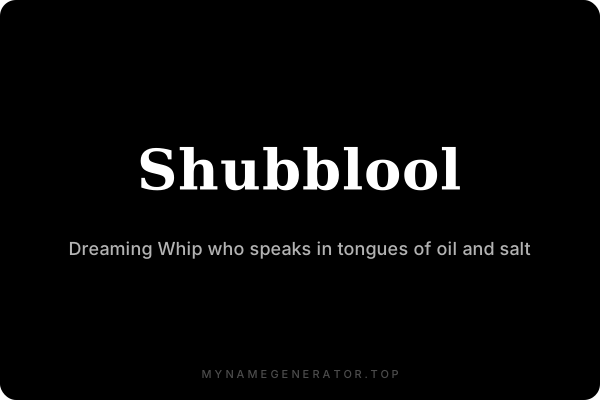
| Shubblool | Dreaming Whip who speaks in tongues of oil and salt | Cultist Tradition | Female |
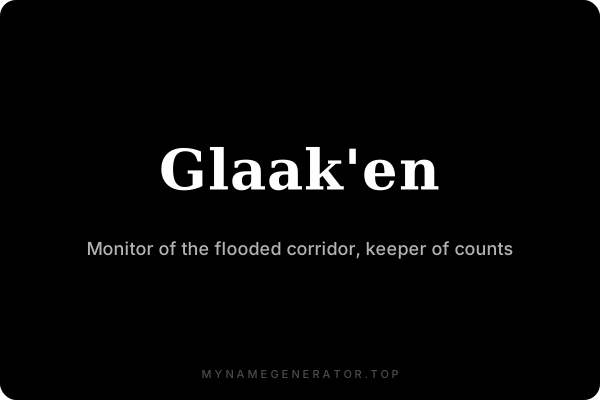
| Glaak'en | Monitor of the flooded corridor, keeper of counts | Modern Fantasy | Neutral |
| Ppluuk | Huntress of albino blind-fish, feeds the shrine | D&D Lore | Female |
| Bloopkreen | Priest whose prophecy foretold the Surface-Walkers' arrival | Cultist Tradition | Male |
Featured Name Cards
Frequently Asked Questions
What is a kuo-toa in D&D?
Kuo-toa are fish-folk from the Underdark in Dungeons and Dragons. They are an ancient, deeply paranoid race driven to near-madness by millennia underground. They worship aquatic deities — most notably Blibdoolpoolp, the Sea Mother — and organize their society around religious roles: Hunters, Monitors, Whips, and Priests. Their most unsettling trait is their ability to collectively will new gods into existence through shared belief.
How do you pronounce kuo-toa names?
Kuo-toa names are meant to sound wet and guttural. Apostrophes mark glottal stops — brief catches in the throat, like the pause in the middle of 'uh-oh.' Doubled consonants (pp, kk, ll) are held slightly longer than single ones. The overall effect should feel like speech produced by a creature more comfortable breathing water than air: short, burbling, and punctuated.
What are kuo-toa roles and how do names reflect them?
Kuo-toa society has four main roles. Hunters and Monitors carry shorter, sharper names suited to combat and surveillance. Whips — religious enforcers who channel divine power — and Priests bear longer, more elaborate names that function as devotional titles. When using this kuo-toa name generator, filter by role to match the name weight to the character's station.
What is the difference between kuo-toa and deep ones or merfolk?
All three are aquatic humanoids but they occupy very different niches. Merfolk (and mermaid figures) are surface-adjacent creatures of the open sea, often depicted as graceful or benevolent. Deep Ones — from Lovecraftian horror — are cosmic cultists of alien gods, sinister but human-adjacent in origin. Kuo-toa are strictly Underdark fish-folk: subterranean, insane, and worshipping deities of their own collective hallucination. Their names, culture, and ecology reflect underground isolation rather than ocean freedom.
Can I use kuo-toa names for other fish-folk or aquatic races?
Yes — the phonetic pattern works for any aquatic creature you want to feel ancient and unsettling. The glottal stops and doubled consonants translate well to homebrew aboleth servants, deep-sea cultists, or any race living in dark subterranean waterways. They contrast cleanly with siren or mermaid names, which tend toward melodic vowels, so mixing the two styles can signal very different factions in the same underwater setting.