Lord of the Rings Name Generator
This lord of the rings name generator draws from Tolkien's constructed languages to produce authentic names for every race in Middle-earth. Whether you need a flowing Elvish name, a guttural Orcish title, or a cozy Hobbit name for your next campaign or fan fiction, each result respects the linguistic rules Tolkien spent decades building.
How Middle-earth Names Are Constructed
Tolkien was a professional linguist, and every race in Middle-earth speaks a language with its own grammar and phonetic identity. Understanding these systems is what separates an authentic-sounding name from a generic fantasy one.
Elves use two primary tongues: Quenya, the ancient High-Elvish, favors long vowels, liquid consonants, and musical endings (-iel, -ion, -wen). Sindarin, the Grey-Elvish spoken in daily life, is slightly harsher, with more consonant clusters and endings like -orn or -dir. A dark elf or high elf character benefits enormously from this distinction.
Dwarves speak Khuzdul, a Semitic-influenced language with hard consonants, short vowels, and Norse undertones. Names often feature doubled consonants and strong stops — Thorin, Bombur, Dwalin. Their human-facing names frequently borrow from Old Norse entirely.
Hobbits use English rural conventions: floral surnames (Goodbody, Took), plain given names, and occasionally flower or gemstone names for women. Men of Middle-earth split between Anglo-Saxon roots (Rohan) and the Numenorean Adunaic tradition, which tends toward grander, more formal constructions. Wizards are Maiar — ancient beings whose names carry weight across ages. Orcs use the Black Speech, all guttural stops and harsh sibilants.
Choosing the Right Middle-earth Name
The most effective approach is to match the race to the character's personality before picking a name. A cunning, ancient character fits an Elvish name with Quenya roots. A blunt, stubborn warrior suits Khuzdul Dwarvish phonetics far better than something flowing. A ranger or wanderer might carry a Man's name with Anglo-Saxon weight — think of how Tolkien named the people of Rohan after Old English heroes.
For tabletop campaigns, the lotr name generator works well beyond strict LOTR settings. A middle earth name generator result can slot into any high-fantasy world where linguistic authenticity matters — the constructed-language feel reads as serious worldbuilding rather than a generic D&D placeholder. Pair an Elvish first name with a Sindarin epithet for NPCs, or use Orcish Black Speech syllables for enemy warlords.
Fan fiction writers should lean into Tolkien's documented naming conventions — readers who know the lore will notice. The tolkien name generator is also useful for naming companion characters, places, or artifacts when you want something that sounds canon-adjacent. When in doubt, favor simplicity: Tolkien's most iconic names (Frodo, Legolas, Gimli) are short and phonetically clean.
Lord of the Rings Name Generator by Variant
Lord of the Rings Female Names
Female names in Lord of the Rings follow Tolkien's invented language families — Sindarin for elves (Galadriel, Arwen, Lúthien), Quenya for high elves (Eärwen, Elenwë), Mannish for humans (Éowyn, Rohan), Hobbit names with English-Germanic warmth (Rosie, Lobelia, Belladonna). The phonology matters: Sindarin favors soft liquids and long vowels, Mannish leans short and martial, Hobbit feels homely. For Middle-earth-inspired fiction, choose phonemes that match the race and region — and the name carries Tolkien-level worldbuilding weight.
- Elowen Star-maiden blessed with ancient wisdom
- Miriel Elven jewel shining with grace
- Galadwen Radiant tree-maiden of Lothlórien
- Silwen Silver maiden of eternal beauty
- Ariëlle Noble Elf daughter of twilight
- Lúthien Enchantress Elf of fair renown
- Eolwen Horse-maiden of the Rohirrim lands
- Celebwen Silver-haired Elf keeper of songs
- Menelwen Heavenly Elf maiden of starlight
- Gweneth Maiden Elf blessed with foresight
- Kharza Dwarf maiden warrior fierce
- Gryla Dwarf woman of mountain strength
Lord of the Rings Male Names
Male names in Lord of the Rings span every race and linguistic family of Middle-earth. Elvish males carry Sindarin or Quenya roots — liquid consonants, long vowels, endings like -ion or -or (Aranor, Thalion, Legolas). Dwarvish names are short and hard-edged, drawn from Old Norse and Khuzdul: Thorin, Gimli, Balin. Hobbit males use plain English rural names with a warm, unheroic feel — Frodo, Samwise, Bilbo. Men of Middle-earth range from the martial Anglo-Saxon weight of Rohan (Eomer, Theoden) to the grander Numenorean tradition (Aragorn, Faramir, Boromir). For fan fiction, RPG campaigns, or any Tolkien-inspired worldbuilding, matching the phonetic family to the race is the fastest way to sound authentic.
- Aelindor Elven archer of the Mirkwood realm
- Thalion Elf lord of strength and nobility
- Aranor Kingly Elf of noble lineage
- Erynion Ancient Elf scholar of lore
- Thorin Dwarf king of great renown
- Gimli Stout-hearted dwarf of valor
- Balin Grey-bearded dwarf of wisdom
- Frodo Hobbit bearer of great burden
- Samwise Loyal hobbit of steadfast heart
- Aragorn Ranger king of noble descent
- Boromir Warrior of Gondor mighty strong
- Faramir Noble man wise and honorable
Popular Lord of the Rings Names
The most iconic Lord of the Rings names span every race and region: Aragorn, Legolas, Gimli, Gandalf, Frodo, Samwise, Boromir, Faramir, Galadriel, Arwen, Éowyn, Théoden. Tolkien crafted these names with deep linguistic consistency — each suggests origin, character, and even moral arc. For fan fiction, tabletop campaigns set in Middle-earth, or any Tolkien-inspired worldbuilding, drawing inspiration from these canonical names ensures linguistic authenticity. Lean into the language family of the character's race for full immersion.
- Aelindor Elven archer of the Mirkwood realm
- Elowen Star-maiden blessed with ancient wisdom
- Thalion Elf lord of strength and nobility
- Miriel Elven jewel shining with grace
- Legolas Green-leaf warrior of the woodland
- Galadwen Radiant tree-maiden of Lothlórien
- Aranor Kingly Elf of noble lineage
- Silwen Silver maiden of eternal beauty
- Erynion Ancient Elf scholar of lore
- Ariëlle Noble Elf daughter of twilight
Popular Lord Of The Rings Names and Their Meanings
| Name | Meaning | Origin | Gender |
|---|---|---|---|
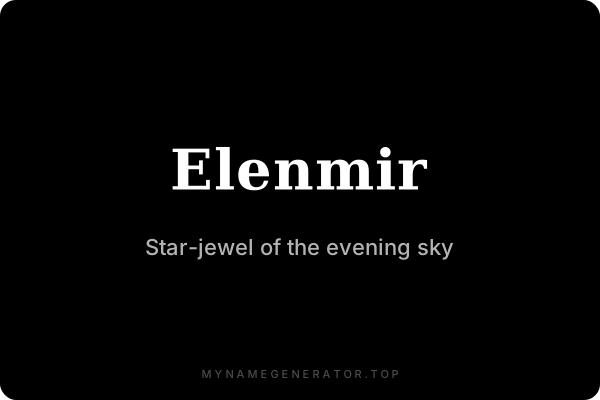
| Elenmir | Star-jewel of the evening sky | Sindarin Elf | Male |
| Alatariel | Maiden crowned with radiant garland | Quenya Elf | Female |
| Thorvald | Thunder-ruler, steadfast in stone halls | Dwarf | Male |
| Brygna | Iron-tempered daughter of deep veins | Dwarf | Female |
| Rosegold Took | Named for the flower she grew beside | Hobbit | Female |
| Peregrin Smallburrow | Wandering one of the under-hill | Hobbit | Male |
| Aldric of Edoras | Old power, noble protector of the realm | Man | Male |
| Solvara | Sun-touched daughter of Numenor | Man | Female |
| Olorin | Dreamer, he who walks in the thoughts of others | Wizard | Male |
| Gothrak | Crusher of bones, feared in the dark pits | Orc | Male |
| Urgsha | Blade-tongue, slayer from the ash plains | Orc | Female |
| Caladwen | Light-maiden, keeper of the silver lamps | Sindarin Elf | Female |
Featured Name Cards
Frequently Asked Questions
What is a Lord of the Rings name generator?
A Lord of the Rings name generator creates names that follow the linguistic rules Tolkien built for each race in Middle-earth — Elvish (Quenya and Sindarin), Khuzdul for Dwarves, Hobbit-style English, Numenorean for Men, and Black Speech for Orcs. The goal is authentic-sounding names, not random fantasy syllables.
What is the best race to pick for an Elvish character name?
For a high elf, Quenya names (long vowels, musical endings like -iel or -ion) are the traditional choice. For a wood elf or dark elf, Sindarin phonetics feel more grounded — shorter, with harder consonants and endings like -orn or -dir. Both styles are authentic to Tolkien's work.
Can I use these names in D&D or other tabletop games?
Yes. Middle-earth names map naturally onto D&D races — Elvish names for elves, Khuzdul-inspired names for dwarves, and so on. The warrior and ranger archetypes in Tolkien also align closely with D&D classes, so a Man of Rohan name works well for a human fighter or ranger character.
How is a Hobbit name different from a wizard name?
Hobbit names are grounded in English rural tradition — plain given names, flower references, and two-part surnames (Baggins, Took, Gamgee). Wizard names are drawn from the Maiar, ancient beings whose names carry Old English or Quenya roots and convey age and power — Gandalf, Radagast, Saruman.
How do I make my Middle-earth name sound authentic?
Match the phonetic rules of the race. Elvish names need vowel sequences and soft consonants. Dwarvish names need hard stops and Nordic weight. Avoid mixing conventions — a name that sounds half-Elvish, half-Orcish reads as invented rather than Tolkienian. Short names with clean syllable structure tend to be the most convincing.