Yeti Name Generator
Find the perfect yeti names for your fantasy world, D&D campaign, or creative story with this yeti name generator. From fearsome Himalayan cryptid names rooted in Tibetan tradition to cute abominable snowman names for kids, explore names that echo glacial peaks and ancient alpine mysteries.
Yeti Naming Conventions
Yeti names draw from two main traditions: the rugged phonology of Tibetan and Nepali languages, and the creative compound-naming that fantasy worldbuilders have developed over decades. Tibetan-inspired names lean on hard consonants — K, G, D, and T — paired with open vowels that evoke the echo of mountain calls: Kagra, Doreth, Tenzuk. Nepali-influenced names often feel rounder and warmer, softening the creature into something more approachable.
A second pattern favors glacial compound names: two evocative roots fused into one. Frostveil, Snowmane, Icegrowl — these names work well for fearsome or ancient yeti archetypes, and fit naturally alongside monster names drawn from the kraken or cerberus tradition. The third style uses cute diminutives for child-friendly contexts: short, bouncy syllables ending in vowels — Bopi, Yiku, Flurru — ideal for games, picture books, or comedic characters inspired by Monsters Inc or Smallfoot.
For mystic or ancient yeti names, hooting roar-sounds are built into the syllable structure: deep OO and OW vowels, rumbling R-clusters, and guttural endings like -ugh, -rak, or -orm give any name the resonance of a snowstorm howl. Mix traditions freely to match your yeti's personality.
Where Yeti Names Come From
The yeti draws on centuries of Himalayan folklore. In Tibetan tradition, the creature is called Migoi or Dremo, a powerful spirit of the high passes that commands respect rather than fear. Sherpa communities across Nepal have long described encounters with a massive bipedal being, and these accounts gave the Western world its abominable snowman mythology. Names rooted in that tradition carry real cultural weight worth honoring.
Popular culture has expanded the yeti's range considerably. The lovable Sully-adjacent monster from Monsters Inc, the clumsy but kind Migo from Smallfoot, and the roaring yet cartoonish yeti from Mickey's Christmas have all shaped a friendlier archetype — perfect for cute yeti names with comedic energy. At the other end of the spectrum, Doctor Who introduced the Great Intelligence's robotic yeti as a genuinely menacing creature, while cryptozoology circles treat yeti sightings with the same seriousness applied to Bigfoot.
Fantasy worldbuilders often blend these threads — pairing a Tibetan syllable root with a glacial compound suffix to create names that feel both grounded and original. When your roster already includes creatures like hydra, basilisk, or werewolf, a distinct yeti name with its own cultural texture helps each monster feel like it belongs to a living mythology.
Popular Yeti Names and Their Meanings
| Name | Meaning | Origin | Gender |
|---|---|---|---|
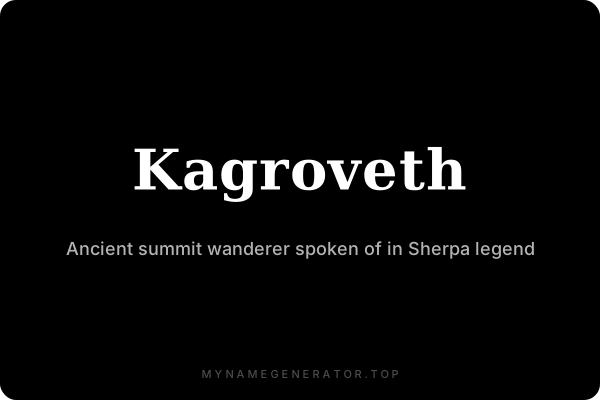
| Kagroveth | Ancient summit wanderer spoken of in Sherpa legend | Tibetan-inspired | Male |
| Snowmane | White-furred elder whose mane is matted with frost | Glacial Compound | Male |
| Doritha | Mountain-born keeper of the high glacier passes | Nepali-inspired | Female |
| Flurru | Playful snow-tumbler who befriends lost climbers | Diminutive | Neutral |
| Icegrowl | Fearsome guardian whose roar silences avalanches | Glacial Compound | Male |
| Tenzuka | Blessed wanderer of the frozen spiritual paths | Tibetan-inspired | Female |
| Bopiru | Clumsy but warm-hearted yeti cub of the lower slopes | Diminutive | Neutral |
| Frostveil | Mystic yeti whose breath hangs like morning mist | Glacial Compound | Female |
| Grukoth | Hooting elder whose call carries across three valleys | Ancient Cryptid | Male |
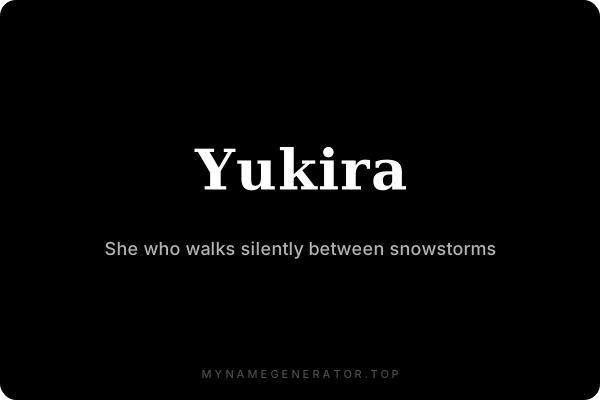
| Yukira | She who walks silently between snowstorms | Nepali-inspired | Female |
| Dorrakh | Immovable mountain spirit feared by wolf and monster alike | Tibetan-inspired | Male |
| Glimsnow | Gentle giant who leaves luminous footprints at dusk | Glacial Compound | Neutral |
Featured Name Cards
Frequently Asked Questions
What are yeti names?
Yeti names are names created for the legendary Himalayan cryptid known as the abominable snowman. They draw from Tibetan and Nepali phonology, glacial compound words, and fantasy traditions, and are used for D&D creatures, fiction characters, games, and creative worldbuilding.
What are good yeti names for a D&D campaign?
For D&D, yeti names with a harsh, ancient quality work best. Names like Kagroveth, Grukoth, or Dorrakh carry the weight of a mountain creature with centuries of legend behind it. Pairing a name with a title — Icegrowl, Warden of the White Pass — adds immediate depth to any encounter.
What are cute yeti names for kids?
Cute yeti names tend to use short, bouncy syllables and soft endings inspired by characters like Migo from Smallfoot. Names like Flurru, Bopiru, or Glimsnow feel friendly and approachable, making them ideal for children's stories, games, or any setting where the yeti is a lovable snow creature rather than a fearsome monster.
Where do yeti names come from in mythology?
The yeti originates in Himalayan folklore, particularly Tibetan and Sherpa traditions where the creature is called Migoi or Dremo. Authentic yeti names often echo those roots, using Tibetan-sounding syllables with hard consonants and open vowels. Western cryptozoology and popular culture have since expanded the naming palette to include glacial compounds and fantasy-style names.
Can yeti names be used for other snow creatures?
Absolutely. Yeti names work well for any large, cold-climate creature in fantasy settings — frost giants, snow trolls, arctic monsters, or glacial golems. The naming patterns overlap naturally with abominable snowman names and snow monster names, so a name built for a yeti character can easily suit any creature that belongs to a frozen, high-altitude world.