Flower Name Generator
Flowers have inspired names for millennia — from ancient botanical Latin to modern fantasy fiction. Our flower name generator offers both real-world botanical names and magical fantasy blooms, each with rich symbolism and cultural depth. Whether you're naming a character after a flower, creating fantasy plants for worldbuilding, or exploring the language of flowers for a creative project, these names carry natural beauty and built-in meaning — just as ladybug names borrow from the same garden world where tiny creatures and blooms share the same charmed space. Like siren names that draw from mythology, flower names tap into deep cultural associations that resonate instantly with readers and players.
Flower Naming Conventions
Real flower names follow several distinct patterns. Many derive from Latin and Greek botanical terms: Amaryllis ("to sparkle"), Hyacinth (a Greek youth), Iris (goddess of rainbows). Others come from the language of flowers (floriography), where Victorian-era meanings still shape how we perceive these names — Lavender for serenity, Poppy for remembrance, Violet for faithfulness.
Fantasy flower names follow a different logic. They combine evocative natural elements with magical modifiers: "Nightbloom," "Frostpetal," "Emberthorn." This compound naming mirrors how druid names blend nature with mystical power. The best fantasy botanical names suggest both what the flower looks like and what it does — "Wyrmbloom" implies both dragon connections and something that grows, while "Voidpetal" immediately signals dark magic.
Gender associations in flower names are culturally constructed but powerful. Names like Rose, Lily, and Jasmine lean feminine, while Thorn, Briar, and Sage carry a more neutral or masculine energy. Fantasy writing has embraced flower names for fairy characters and nature-connected archetypes, similar to how high-elf names use melodic vowel patterns to signal elegance and grace.
Finding the Perfect Flower Name
Context determines which flower name works best. For realistic fiction, stick to real botanical names with meaningful symbolism — a character named Dahlia (inner strength) tells a different story than one named Oleander (beauty with danger). The Victorian language of flowers provides a rich cheat sheet for writers: every bloom carries a message that adds subtext without exposition.
For D&D campaigns and fantasy worldbuilding, fantasy flower names create instant atmosphere. A witch's garden might contain Wraithbloom and Bloodroot. A fairy grove could feature Faeriebell and Moonlace. These names work alongside witch names and dark fantasy elements to build immersive settings. Consider pairing flower names with character roles — a healer named Yarrow (the warrior's healing herb) or a necromancer whose symbol is the Voidpetal.
Baby name seekers and pet owners also love flower names. Shorter names (Sage, Briar, Wren) work well as first names, while longer botanical names (Amaryllis, Forsythia, Wisteria) make elegant, distinctive choices. Kids often name their pets after flowers or fierce creatures — a rabbit called Daisy, a dog called t-rex — reflecting the same imaginative leap from gentle nature to prehistoric power. Japanese flower names like Sakura add cross-cultural depth, connecting to traditions explored in our japanese name collections.
Popular Flower Names and Their Meanings
| Name | Meaning | Origin | Gender |
|---|---|---|---|
| Amaryllis | To sparkle — pride and determination | Greek | Female |
| Hyacinth | Greek youth loved by Apollo — playfulness | Greek | Male |
| Lotus | Spiritual awakening and rebirth | Eastern | Neutral |
| Sakura | Cherry blossom — beauty and impermanence | Japanese | Female |
| Thistle | Scotland's flower — defiance and resilience | Celtic | Neutral |
| Nightbloom | Fantasy flower that opens only in darkness | Fantasy | Neutral |
| Dahlia | Inner strength and creativity | Scandinavian | Female |
| Emberthorn | Volcanic flower with smoldering red petals | Fantasy | Neutral |
| Wisteria | Longevity, romance, and immortality | Japanese | Female |
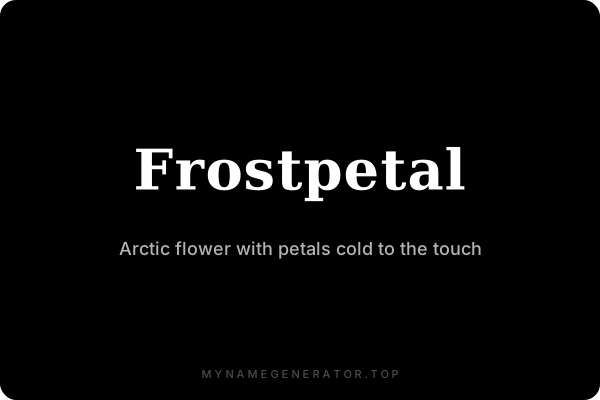
| Frostpetal | Arctic flower with petals cold to the touch | Fantasy | Neutral |
| Sage | Wisdom, immortality, and healing | Latin | Neutral |
| Wraithbloom | Ghostly flower visible only to those with the Sight | Fantasy | Neutral |
Featured Name Cards

Frequently Asked Questions
What is a flower name generator?
A flower name generator creates names inspired by real-world flowers and fantasy botanical creations. It includes both genuine flower names (Rose, Dahlia, Iris) with their meanings and symbolism, and invented fantasy flower names (Nightbloom, Frostpetal) for worldbuilding and creative projects.
What are good flower names for fantasy characters?
For fantasy characters, consider names that match their personality: Briar for a tough, protective character, Lotus for a wise sage, or Nightbloom for a mysterious figure. Fantasy flower names like Emberthorn and Wyrmbloom work perfectly for D&D druids, fairies, and nature-connected characters.
Can I use botanical names as character names?
Absolutely! Many flower names are already established as human names — Lily, Rose, Iris, Jasmine, Sage, and Hazel are all common first names. Less common botanical names like Amaryllis, Forsythia, or Camellia make distinctive choices that stand out while remaining elegant.
What's the difference between real and fantasy flower names?
Real flower names come from actual plants with documented meanings and cultural symbolism (Lavender for serenity, Poppy for remembrance). Fantasy flower names are invented for fiction and games — names like Voidpetal or Moonlace that describe magical properties no real plant has.
How do I choose a flower name with the right symbolism?
Start with the emotion or trait you want to convey. For love, consider Rose or Tulip. For strength, try Thistle or Dahlia. For mystery, Oleander or Aconite (wolfsbane). The Victorian language of flowers — floriography — is a great reference for matching blooms to meanings.