Royal Name Generator
This royal name generator creates dynasty names drawn from history's greatest royal houses — Tudor, Habsburg, Romanov, Bourbon, and beyond. Whether you need a medieval throne name, a Victorian aristocrat surname, or a royal family name generator for your fantasy world, find the perfect name here.
How Royal Last Names Are Formed
Royal family names follow patterns shaped by centuries of dynastic politics. The most recognizable are patronymic dynasties — names passed from father to child and worn by entire ruling lines. Tudor, Plantagenet, and Valois became synonymous with the kingdoms they ruled. These names rarely changed; they were the brand of legitimacy itself.
A second pattern borrows from place names and territories. Habsburg derives from Habichtsburg, a Swiss castle. Romanov came from the Romanov boyar estate. This geographic anchoring gave dynasties a sense of deep territorial roots. Fantasy settings use the same logic: a castle or an elven-city can inspire a dynasty name that feels instantly believable.
Victorian and modern royal surnames evolved differently. After World War I, European royals anglicized or simplified their names — the British House of Saxe-Coburg-Gotha became Windsor in 1917. Today, many royals carry compound hyphenated names blending multiple dynastic lines; a combine name generator handles exactly this layering. When building a middle-name or combine-name for a noble character, this logic gives depth: first name, dynastic surname, territorial title.
Female royal names historically followed the male dynastic line but are gaining their own conventions in modern storytelling — strong, standalone surnames that carry authority regardless of gender.
Finding Your Royal Dynasty Name
The richest source of inspiration is history itself. The Habsburgs ruled for six centuries through strategic marriages. The Romanovs shaped an empire across eleven time zones before their dramatic fall. The Bourbons sat on thrones in France, Spain, and Naples simultaneously. Each name carries weight — use that weight deliberately when naming your character or fictional house.
For fantasy settings, look beyond Europe. Feudal Japanese clan names like Tokugawa and Minamoto share the same dynastic gravity as their Western counterparts. A tavern in a medieval fantasy world might bear the crest of a forgotten dynasty; an anime storyline might resurrect an ancient bloodline. The same principles apply: short, resonant, tied to land or lineage.
For non-binary or gender-fluid characters, medieval dynastic surnames work especially well because they are inherently neutral — they belong to a house, not a person; a non binary names search will surface many that carry equal authority. Pairing a strong dynastic surname with a carefully chosen middle-name gives any character instant noble credibility, whether your setting is historical, Victorian, or entirely fantastical.
Popular Royal Name Names and Their Meanings
| Name | Meaning | Origin | Gender |
|---|---|---|---|
| Aldravaine | Ancient noble house known for silver-tongued diplomats | French | Female |
| Thorncastle | Warrior dynasty that held the northern border for generations | English | Male |
| Valermont | Mountain lords descended from a legendary Medieval king | French | Female |
| Edwynmore | Victorian aristocratic line celebrated for scholarship and reform | English | Male |
| Soldraken | Fantasy dragon-blessed royal house ruling a sunlit empire | Fantasy | Male |
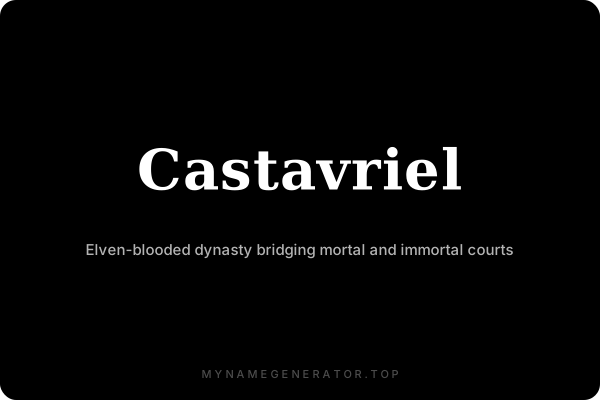
| Castavriel | Elven-blooded dynasty bridging mortal and immortal courts | Fantasy | Female |
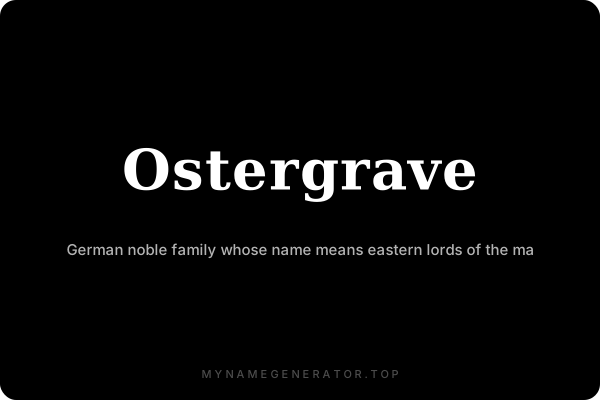
| Ostergrave | German noble family whose name means eastern lords of the march | German | Male |
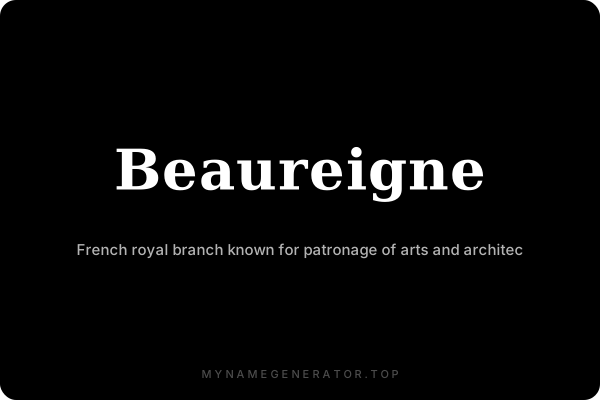
| Beaureigne | French royal branch known for patronage of arts and architecture | French | Female |
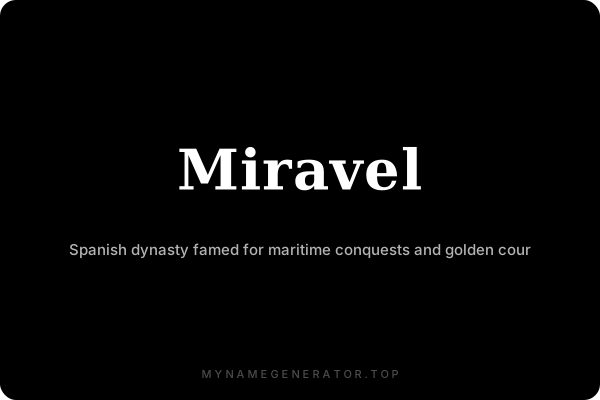
| Miravel | Spanish dynasty famed for maritime conquests and golden courts | Spanish | Female |
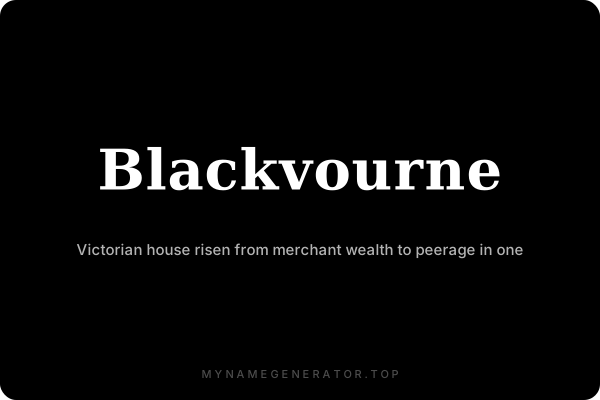
| Blackvourne | Victorian house risen from merchant wealth to peerage in one generation | English | Male |
| Strelnikov | Medieval Slavic warrior clan elevated to royal rank after decisive battle | Slavic | Male |
| Aurenthal | Fantasy queendom dynasty meaning golden valley in the old tongue | Fantasy | Female |
Featured Name Cards
Frequently Asked Questions
What does a royal last name generator do?
A royal last name generator produces dynasty surnames inspired by real and fictional royal houses. It combines historical patterns from dynasties like Tudor, Habsburg, and Romanov with fantasy naming conventions to create names that feel noble, legitimate, and memorable.
What are the best royal family names from history?
The most recognized royal family names include Tudor (England), Habsburg (Austria-Spain), Romanov (Russia), Bourbon (France, Spain), Plantagenet (England), Valois (France), and Hohenzollern (Germany). Each carries centuries of political and cultural weight, making them powerful models for character naming.
Can I use royal last names for fantasy or anime characters?
Absolutely. Royal dynastic names translate naturally into fantasy and anime settings. Many anime storylines feature noble houses with names built on the same patronymic and territorial principles as real dynasties. The key is choosing a name that sounds authoritative and carries a sense of lineage.
What is the difference between a royal name and a noble name?
Royal names belong to reigning dynasties — families that held or hold sovereign power. Noble names belong to the aristocracy below the throne: counts, dukes, barons, and marquesses. In practice the naming conventions overlap significantly, and many noble houses rose or fell from royal status over generations.
How do I create a convincing royal last name for my character?
Start with a geographic or ancestral root — a castle, a region, or a founding figure. Keep it short (one to three syllables), give it a strong consonant or a noble vowel ending, and consider the era. Medieval names tend toward harsh consonants and Old French or Latin roots; Victorian names are often hyphenated or Anglicized; fantasy names can blend both traditions freely.