Dragonkin Name Generator
Our dragonkin name generator creates names for dragon-blooded humanoids who carry the ancient power of dragons in their veins. Whether you need draconic names rooted in guttural power, regal half-dragon names, or elemental compound titles, this tool covers every facet of dragon heritage — from Firescale warlords to Frostmaw scholars.
Dragonkin Naming Conventions
Dragonkin names draw from a phonetic tradition built on strength and antiquity. Ancient draconic-style names — Vexarath, Korthrax, Saryndra — favor hard gutturals (k, x, r, th) combined with long vowels that give each name a resonant, commanding quality. The result sounds nothing like the flowing elegance of elf names or the blunt simplicity of orc names: dragonkin names occupy a regal middle ground, heavy with implied history.
Shorter regal names — Pyron, Nyxis, Ashen — strip away syllables to achieve concentrated power, often used by dragonkin who have fully integrated into mortal society and chosen a name others can actually pronounce. Compound elemental titles such as Stormwing, Emberclaw, or Frostmaw function as earned epithets tied to a dragonkin's elemental affinity, and are frequently used as surnames or honorifics.
Element plays a decisive role: Fire-blooded dragonkin tend toward names with sibilant and hard-stop consonants (Pyrrath, Cindervex), while Frost lineages prefer crisp vowels and soft endings (Glacis, Nyxara). Storm and Shadow lines often lean into compound constructions that evoke their element directly. Tiefling names share a similar ancient gravitas but lack the elemental anchor that defines dragonkin naming traditions.
Choosing Your Dragonkin Name
When building a dragonkin character, your elemental bloodline is the strongest naming cue. A Shadow-blooded dragonkin might carry a name like Umbravex or Nocthrax, while an Earth-blood lineage suits names grounded in hard consonants and stone imagery — Granithorn, Bouldaryx, Terrakin. Let the element shape the phonetics before you settle on a final name.
In tabletop RPGs, dragonkin are a compelling alternative to the standard D&D dragonborn: they can feel wilder, less codified, and more open to homebrew interpretation. Players building mixed-lineage characters often pair dragonkin with half orc names to capture that same raw, dual-heritage energy. A dragonkin name pairs naturally with a descriptive epithet — "Vexarath of the Cinderpeaks" or "Glacisyn, the Last Frostmaw" — giving your character immediate narrative weight at the table. The aasimar and wyvern lore pages offer adjacent naming inspiration if you want a celestial or bestial counterpoint to draconic heritage.
For fiction and worldbuilding, dragonkin appear across fantasy settings from Magic: The Gathering to original novels. Consider whether your character embraces or conceals their dragon heritage — that choice often dictates whether they lean into ancient draconic names or adopt a shorter, more approachable alias for the world they move through.
Popular Dragonkin Names and Their Meanings
| Name | Meaning | Origin | Gender |
|---|---|---|---|
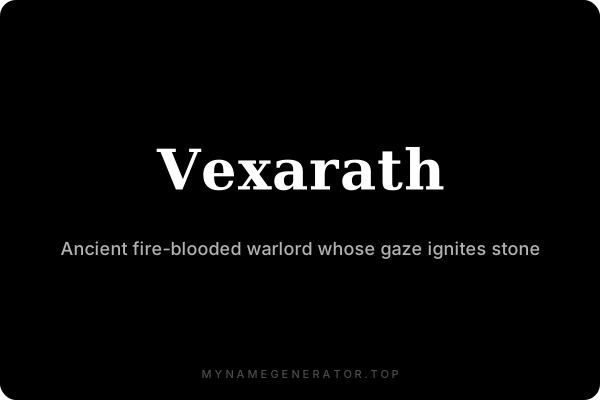
| Vexarath | Ancient fire-blooded warlord whose gaze ignites stone | Draconic | Male |
| Saryndra | Storm-touched matriarch, caller of lightning from still skies | Draconic | Female |
| Korthrax | Shadow lineage lord, moves unseen between worlds | Draconic | Male |
| Glacisyn | Frost-blood scholar who reads prophecy in ice | D&D Inspired | Female |
| Pyron | Regal fire-blooded champion, named for the first flame | Modern Fantasy | Male |
| Nyxis | Shadow-born spy whose scales shift like dark water | Modern Fantasy | Neutral |
| Ashen | Survivor of a dragon's breath, reborn from the cinders | Modern Fantasy | Neutral |
| Emberclaw | Fire-blood warrior whose strikes leave scorched earth | D&D Inspired | Male |
| Frostmaw | Frost lineage elder whose breath freezes rivers solid | D&D Inspired | Female |
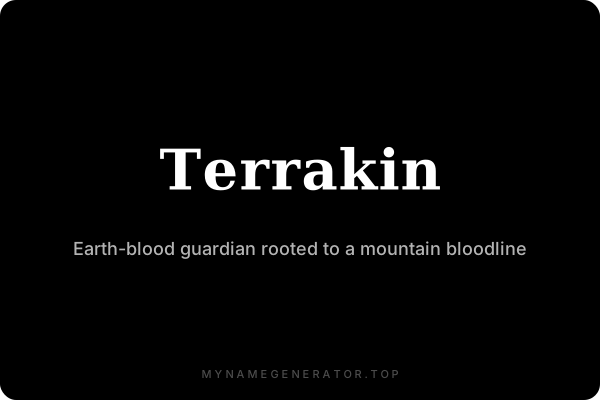
| Terrakin | Earth-blood guardian rooted to a mountain bloodline | Modern Fantasy | Male |
| Stormvael | Storm-blooded oracle who speaks in thunderclaps | Draconic | Female |
| Umbravex | Shadow dragonkin assassin, leaves no trace and no mercy | Modern Fantasy | Neutral |
Featured Name Cards
Frequently Asked Questions
What are dragonkin names?
Dragonkin names are names for dragon-blooded humanoids — half-dragons, dragon hybrids, and races that carry draconic ancestry. They typically feature hard guttural consonants, long resonant vowels, and elemental references, giving them an ancient, powerful quality distinct from other fantasy races.
What makes a good half-dragon name?
A good half-dragon name balances draconic weight with usability. Ancient draconic names like Vexarath or Korthrax work for characters deeply tied to their heritage, while shorter regal names like Pyron or Ashen suit dragonkin who move through mortal society. Adding an elemental epithet — Emberclaw, Frostmaw, Stormwing — enriches any half-dragon name further.
Can I use dragonkin names for D&D campaigns?
Absolutely. Dragonkin names work perfectly for D&D characters, whether you're playing a dragonborn, a homebrew half-dragon race, or any character with draconic sorcerer bloodline. They also make excellent names for dragon-themed NPCs, warlords, or ancient clan leaders in your campaign setting.
What is the difference between dragonkin and dragonborn — or wyvern?
In most settings, dragonborn are a codified D&D race with specific traits, while dragonkin is a broader term covering any dragon-blooded humanoid, including half-dragons and dragon hybrids. Wyverns, by contrast, are fully bestial creatures — not humanoid — so wyvern names tend toward raw, feral sounds rather than the regal draconic phonetics of dragonkin names.
What elements can dragonkin be tied to?
Dragonkin bloodlines commonly align with Fire, Frost, Storm, Earth, and Shadow — each shaping both their powers and their naming traditions. Fire-blooded dragonkin carry sibilant, hard names; Frost lineages favor crisp vowels; Storm and Shadow lines often use compound epithets. This generator lets you filter by element to find names that match your character's heritage.