Lizardfolk Name Generator
Every lizardfolk name carries the cold pragmatism of a swamp survivor. This lizardfolk name generator produces guttural, sibilant tribal names rooted in D&D lore — from hissing hunter titles to elder shaman designations. Find a lizardfolk name that fits your reptilian character's role, clan, and instincts.
Lizardfolk Naming Conventions
A lizardfolk name is rarely chosen — it is assigned, earned, or remembered. In D&D lore, lizardfolk society is strictly pragmatic: a hatchling receives a name tied to a notable event, a physical trait, or the conditions of its birth. Achuak means "green," Kassoon describes a sound heard at hatching, and Thasshakka evokes the snap of a closing jaw.
Phonetically, lizardfolk names cluster around sibilant consonants — S, Sh, Ss, Th — combined with short vowels and hard stops. The result is a name that sounds like something between a hiss and a bark. Unlike orc names, which favor blunt stops and roaring syllables, or goblin names, built on sharp, chaotic bursts, lizardfolk names carry a measured, cold quality that reflects their reptilian nature.
Clan and role also shape the name. A warrior might carry a single guttural tag — Sauriv, Krask — while a shaman accumulates descriptive suffixes over decades. Compared to triton names, which flow with oceanic rhythm, or hobgoblin names, which enforce military rank, lizardfolk naming is purely functional: the name must be useful, nothing more. Even kuo toa names, alien and guttural as they are, share this same non-humanoid pragmatism.
Choosing Your Lizardfolk Name
When picking a lizardfolk name for D&D, start with the character's role in the tribe. A hunter needs a short, sharp name easy to hiss in the field — Krask, Sarrik, or Thessh. An elder shaman might bear a compound name earned over a lifetime: Shessikar, Vasshakka, or Thasshoon. Outcasts often lose part of their original name, keeping only a clipped syllable as identifier.
Lizardfolk lore from D&D sources like Volo's Guide to Monsters emphasizes that these reptilians view naming as purely descriptive, not sentimental. That opens creative space: a lizardfolk name can reference color, a kill, weather, or a scar. Names like Sauriv (from "saur," lizard root) or Kassoon (a sound memory) follow this logic directly.
For contrast, consider how other races approach identity. Tabaxi names reference life events with poetic flair; loxodon names carry deep ancestral weight. Lizardfolk names skip the poetry entirely. That minimalism is their strength — a lizardfolk name should feel immediate, physical, and slightly dangerous, just like the creature bearing it.
When spoken at the table, a good lizardfolk name draws out the hiss. Double the sibilants, extend the final syllable, and the whole party tunes in — the sound itself becomes character.
Popular Lizardfolk Names and Their Meanings
| Name | Meaning | Origin | Gender |
|---|---|---|---|
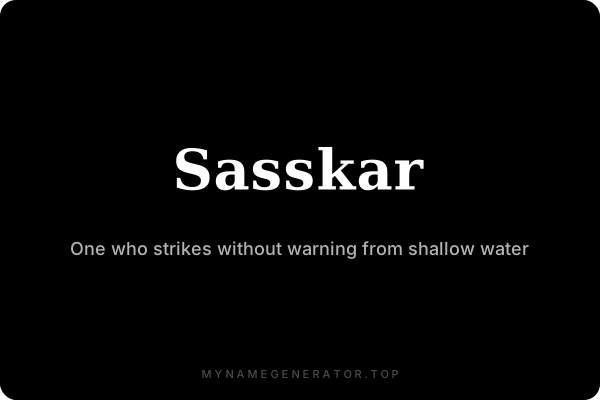
| Sasskar | One who strikes without warning from shallow water | Tribal | Male |
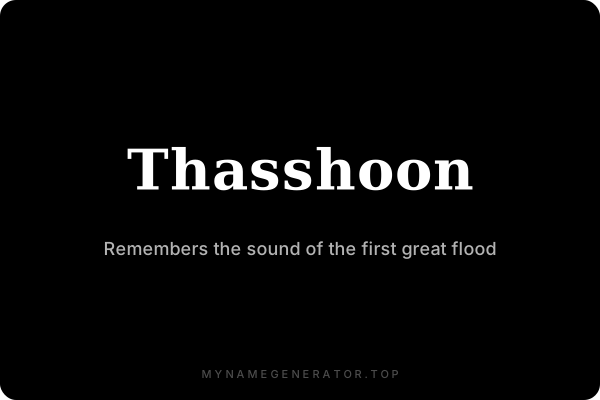
| Thasshoon | Remembers the sound of the first great flood | Tribal | Neutral |
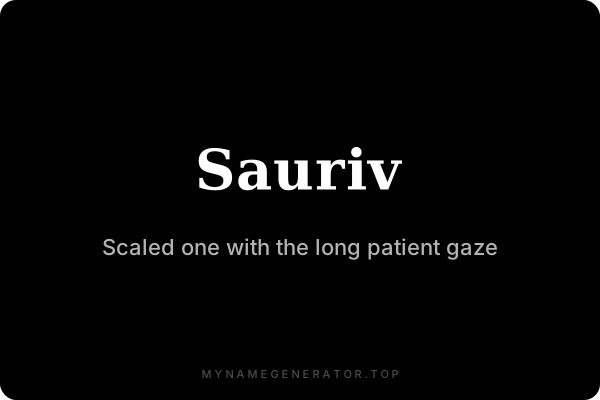
| Sauriv | Scaled one with the long patient gaze | D&D Lore | Male |
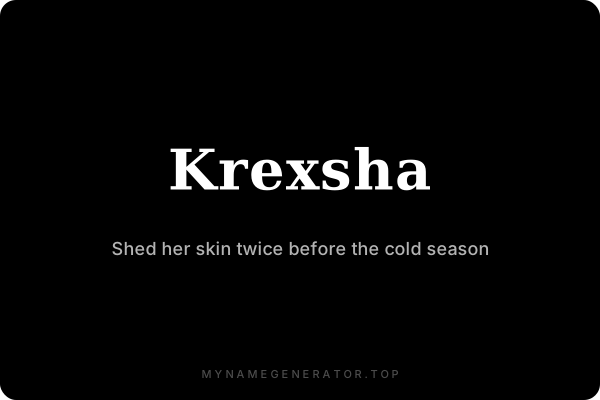
| Krexsha | Shed her skin twice before the cold season | Tribal | Female |
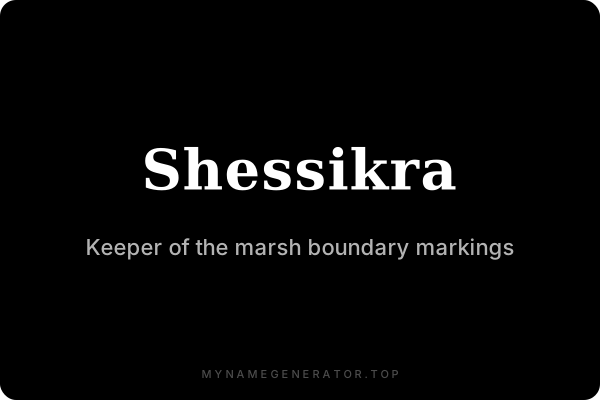
| Shessikra | Keeper of the marsh boundary markings | Tribal | Female |
| Vasshak | Cracks bones to reach the warmth inside | Tribal | Male |
| Kasshari | Named for the hiss of rain on hot stone | D&D Lore | Neutral |
| Thraxson | Counts kills on the inner forearm scales | Tribal | Male |
| Ssissha | Moves without displacing water or reeds | Tribal | Female |
| Akhurak | Elder who remembers three generations of territory | D&D Lore | Neutral |
| Reshkavar | Survived a winter that killed half the clutch | Tribal | Male |
| Thassikka | Voice carries the authority of the deep swamp | Tribal | Female |
Featured Name Cards
Frequently Asked Questions
What is a lizardfolk name?
A lizardfolk name is a tribal designation used by the reptilian humanoids of D&D lore. These names are typically short, sibilant, and descriptive — assigned based on a hatchling's circumstances, physical traits, or notable events rather than family lineage. Examples from official lore include Achuak, Kassoon, and Sauriv.
What are the best lizardfolk names for D&D?
The best lizardfolk names for D&D feel guttural and reptilian — heavy on S, Sh, Th, and K sounds. Lore-authentic examples include Shessikar, Thasshakka, and Sauriv. For custom characters, names like Sasskar, Vasshak, or Krexsha capture the same cold, pragmatic tone while remaining original.
Can lizardfolk names be used for female characters?
Yes. Lizardfolk society in D&D does not strongly differentiate names by gender — names are tied to events or traits, not sex. That said, some players prefer softer sibilants for female lizardfolk: Ssissha, Krexsha, or Thassikka work well while still sounding authentically reptilian.
How are lizardfolk names different from orc or goblin names?
Lizardfolk names favor sustained hissing sounds and measured syllables, which sets them apart. Orc names lean on blunt stops and aggressive vowels. Goblin names tend to be short and chaotic. Hobgoblin names often carry military formality. Lizardfolk names occupy their own space — cold, functional, and sibilant rather than aggressive or whimsical.
How do I create my own lizardfolk name?
Combine sibilant consonants (S, Sh, Ss, Th, Kr) with short vowels and hard endings. Aim for one or two syllables for warriors and hunters, two to three for elders and shamans. Optionally root the name in a trait or event: a color, a sound, a season, a kill. Avoid soft or flowing sounds — a lizardfolk name should land like a jaw snap, not drift like a triton song.