Ghost Name Generator
Whether you need spooky ghost names for a haunted house story, a horror RPG, or a supernatural character, our ghost name generator conjures the perfect phantom identity. From mournful shades to vengeful revenants, each name carries the weight of the afterlife — eerie, memorable, and unmistakably haunted.
Ghost Naming Conventions
Ghost names across folklore and fiction draw from two distinct traditions. The first is the human name preserved in death — a ghost called Eleanor or Obadiah immediately suggests a Victorian specter with unfinished business. These haunted names carry the weight of their era, hinting at who the spirit was before passing beyond the veil.
The second tradition leans into the supernatural nature of the spirit itself. Names like Veilmere, Ashenwraith, or Morvane describe what the ghost has become rather than who it once was. This approach works especially well for ancient apparitions — shades so old their human identity has dissolved into pure spectral essence. Phantom names in this style often feature soft, breathy sounds: whispered vowels, fading endings, and syllables that seem to drift like fog.
A third hybrid style merges both worlds — a ghost that retains a human first name but adopts a spectral surname. Think of how witch names blend the familiar with the arcane, or how siren names balance beauty with menace. Wraith names built this way feel grounded yet otherworldly, ideal for characters who linger between life and the unknown. The same duality applies when a ghost shares a setting with a werewolf — both creatures straddle human and monster, and their names should reflect that tension. Crossover horror settings that pair a haunting with a curse might borrow directly from our werewolf names for a monstrous foil to the spirit.
Gender plays a subtle role in ghostly naming. Female ghosts in folklore tend toward lamenting, melodic names — banshee traditions in particular favor keening, vowel-rich sounds, and the lamia of Greek myth shows how supernatural femininity can haunt through seduction as much as sorrow. Male spectral names often skew toward heavier, more foreboding tones. Unknown or genderless spirits — poltergeists, formless shades — suit ambiguous, abstract names that resist easy categorization.
Finding the Right Ghost Name for Your Story
The most effective ghost name generator results are ones that match the spirit's reason for haunting. A revenant driven by betrayal needs a name that feels wounded and unresolved — something with a hard stop mid-word, a syllable that catches in the throat. A poltergeist of pure chaos suits a name that feels unstable, almost unpronounceable. A banshee herald of death demands something that sounds like a wail given form.
Consider the setting carefully. Gothic horror calls for archaic spooky ghost names with old-world resonance — names that belong in crumbling manors and fog-choked graveyards. A modern horror story might subvert expectations with a mundane name made terrifying by context. Lovecraftian horror pushes further still — ghost names in that tradition are deliberately unpronounceable, evoking cosmic dread beyond human comprehension. Supernatural fantasy, the territory shared with demon and necromancer lore, opens the door to more invented phantom names that feel timeless.
For tabletop RPG and worldbuilding, ghost names double as lore hooks. A specter named Caldris the Undone tells a story before you explain a single detail. Layering a title onto a ghost name — the Pale Witness, the Hollow Bride — transforms a name into a legend. Haunted names with built-in mythology make encounters memorable and give players something to investigate, fear, and ultimately lay to rest.
Popular Ghost Names and Their Meanings
| Name | Meaning | Origin | Gender |
|---|---|---|---|
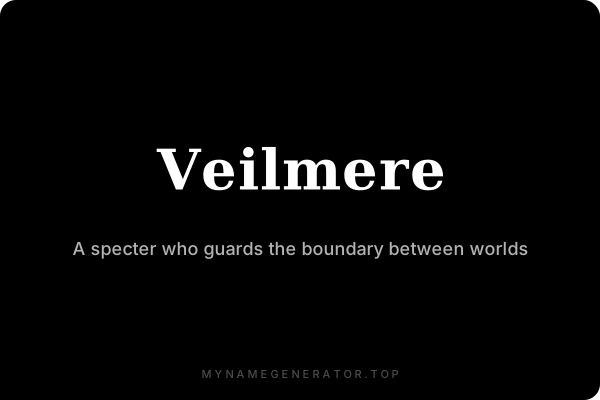
| Veilmere | A specter who guards the boundary between worlds | Spectral | Female |
| Caldris | Ancient shade whose cold presence extinguishes flames | Archaic | Male |
| Morvane | Phantom of the moors, seen only at dusk | Celtic | Female |
| Ashenwraith | Born from the embers of a cursed fire | Spectral | Unknown |
| Seraphel | A fallen soul still whispering prayers into empty air | Celestial | Female |
| Duskhollow | Poltergeist dwelling in the space between heartbeats | Shadow | Unknown |
| Elowyn | Victorian revenant searching for a letter never sent | English | Female |
| Graven | Wraith carved from grief and years of silence | Archaic | Male |
| Nyxara | Banshee whose cry foretells the death of kings | Greek | Female |
| Pallorth | Formless specter that mirrors the face of the living | Spectral | Male |
| Thornshade | A revenant bound to the site of an ancient wrong | Shadow | Male |
| Umbrel | Shade so old it has forgotten what it mourns | Archaic | Unknown |
Featured Name Cards
Frequently Asked Questions
What is a ghost name generator?
A ghost name generator creates names for spectral beings — spirits, wraiths, revenants, banshees, and other undead entities. It's useful for horror writers, game masters, tabletop RPG players, and anyone building a supernatural story or world.
What are good spooky ghost names?
The best spooky ghost names combine eerie sounds with a sense of loss or menace. Names like Veilmere, Morvane, or Ashenwraith work well because they feel otherworldly without being unpronounceable. For a more grounded haunting, aged human names like Elowyn or Graven carry quiet dread.
What is the difference between a ghost, a wraith, and a specter?
In most fantasy and horror traditions, ghosts are the spirits of the once-living with unfinished business. Wraiths are more corrupted — spirits drained of humanity, driven by hunger or hatred. Specters tend to be more diffuse, defined by an emotion or event rather than a personality. These distinctions shape how you might name each type.
Can I use these phantom names in D&D or other RPGs?
Absolutely. Phantom names and haunted names from this generator work well for D&D ghosts, revenants, banshees, and poltergeists. They also suit horror-adjacent systems and dark fantasy settings. A named ghost becomes a story hook rather than just an encounter.
How do I name a ghost character in a story?
Consider whether your ghost retains its human identity or has become something more abstract. A recently dead spirit suits a period-appropriate name that feels out of time. An ancient shade suits an invented name built from eerie syllables. The type of ghost — banshee, revenant, poltergeist — should also influence the sound and weight of the name.